On Writer’s Block

I have decided to own my writer’s block—the reason I haven’t posted in a long time, since January.  I have felt incompetent, like my writing is silly, frivolous, worthless. I’ve been ruminating on this for months, turning the idea over and over in my mind, poking at it. I’ve come to see that writer’s block is more than mere “fear of the blank page”—it’s complicated.

Our “fear of the blank page” is fear of writing—fear of what happens when we write, of what might happen after we write, fear of what might happen if someone ever reads what we write, fear that our writing might be less than perfect. But is that all it is?

If you google “writer’s block”, you will get thousands of hits. My admittedly cursory review finds that many of the hits are lists: 15 surefire strategies to beat writers block! Thirty techniques that work! Most offer ways around writers block, ways to trick your psyche into writing, showing you how to crawl in through the back door, by working on character development, for example, plot lines, or eavesdropping on characters, even simply skipping the first sentence of the story and starting in the middle. (How is that less frightening?)

My googling led me to Maria Konnikova’s New Yorker article, “How to Beat Writer’s Block”. She describes the 1940s work of Edmund Bergler, a psychoanalyst who believed that writers who are blocked should seek psychotherapy because it is their subconscious issues that are blocking them. Later, Yale University psychologists Jerome Singer and Michael Barrios conducted a study of blocked writers, and found that all were unhappy, though for different reasons. The writers they studied fell into four categories: an anxious group, an angry group, an apathetic group, and a negative group. All the groups were found to lack motivation to write and their ability to create mental imagery was decreased, but these problems were rooted in different issues among the groups.

Of the anxious group, Konnikova says, they “felt unmotivated because of excessive self-criticism—nothing they produced was good enough—even though their imaginative capacity remained relatively unimpaired…they could still generate images, [but] they tended to ruminate, replaying scenes over and over, unable to move on to something new.”

When I read these words, I wanted to grab my tinfoil hat because someone had been peering into my mind. The novel I have been thinking about has been stalled while I replay the opening scenes over and over. Indeed, I considered and reconsidered this post many times before I sat down two months ago to begin typing it out, and since then—well, let’s just say I’ve continued to “revise” and “edit” it in my endless quest for perfection.

In the research study, the blocked writers were given prompts to work with, which over time alleviated their blocks. The upshot is that creative work can itself be a kind of therapy, and just writing can be the path through writers block.

Natalie Goldberg inherently understands this, although she has said she doesn’t believe in writer’s block. In her book, Wild Mind: Living the Writer’s Life, she acknowledges the subject by distinguishing waiting and procrastination. Waiting is when you’ve been working on something, percolating it, but “procrastination is pushing aside or putting off writing. It is thinking the moment is tomorrow.“  Waiting is “when you are letting writing work on you…Waiting is when you are already in the work and you are feeding it and being fed by it. Then you can trust the waiting. Do not use the excuse of ‘waiting’ for the right idea or story in order to begin. That is procrastination. Get to work.”

This is Goldberg’s approach, writing as practice, as discipline—just write, write through it. When you think you can’t write, just write, write in notebooks that no one will ever read, keep your hand moving. 10 minutes. Go.

I have procrastinated for years. Although writing has always been what I do best, the fear and perfectionism it engendered made me put it off—until I’m older, until I have more life experience, until I have more education or knowledge. The right moment to write was always tomorrow. But the clock ticking away in the empty nest must have triggered something. If I don’t have enough life experience by now—in my mid-60s—I never will. The time for procrastination was over, and a couple years ago, I began trying to write again.

But procrastination isn’t all of it. Stress—whether induced by cataclysmic life events, work, or family issues—gets in the way of writing, blocks us in a different way. Lately, I may want to write, but something always gets in the way of writing: the “shoulds” of my life—all the things I should do before taking the time for myself, to write. Even if I sat down to do “10 minutes—go!” the shoulds would overwhelm and defeat my writing.

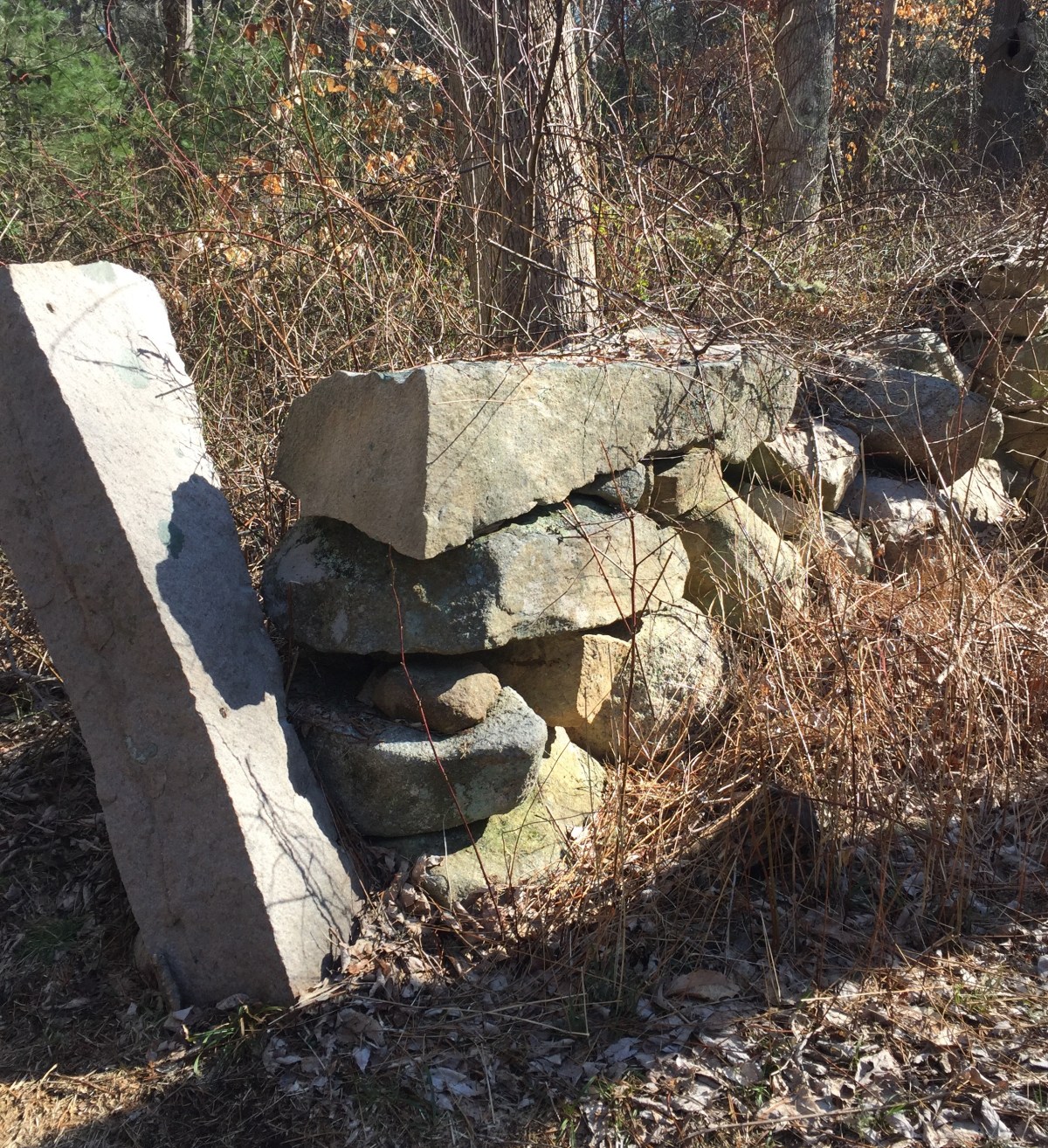
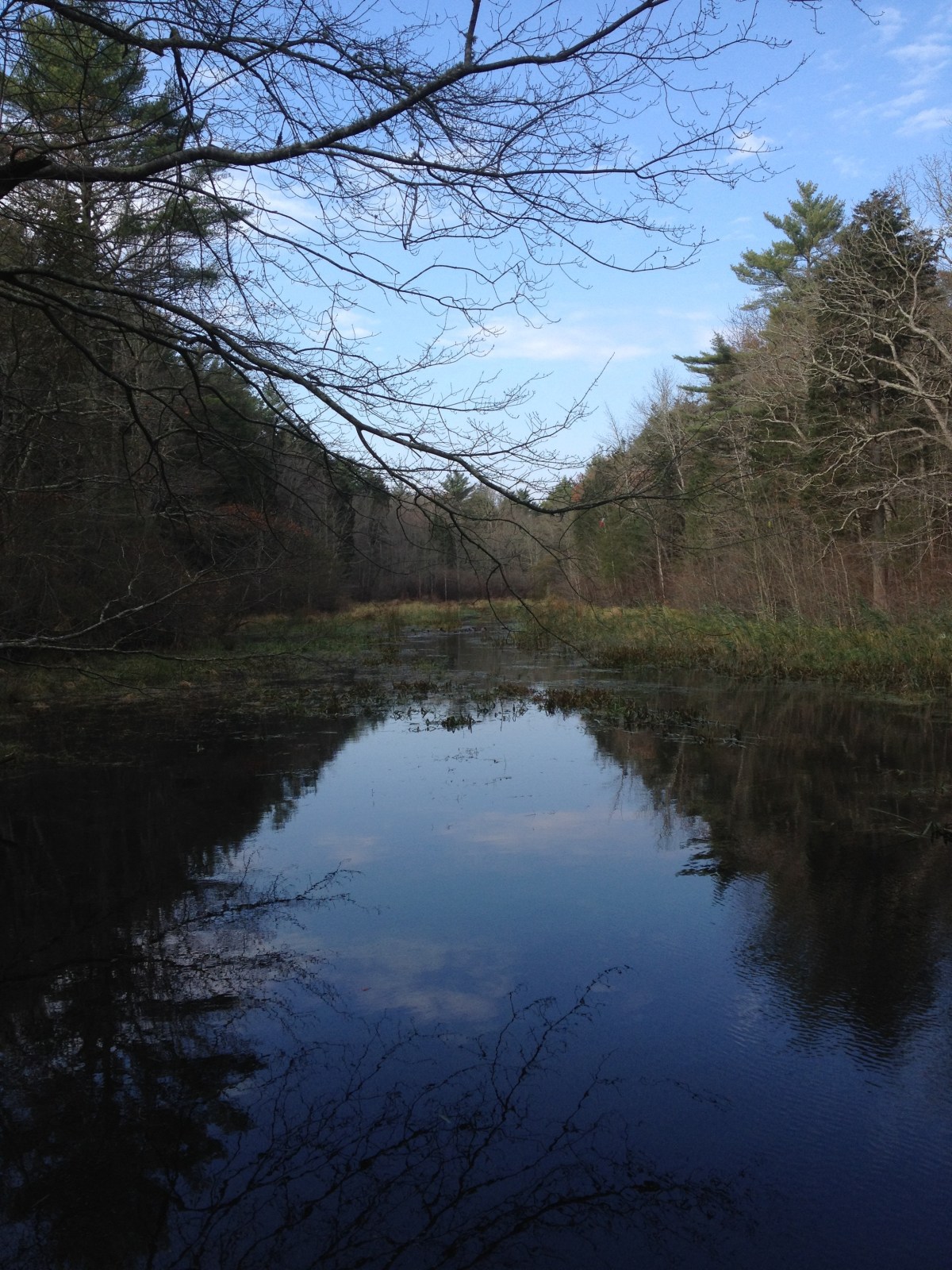
I’d thought of writer’s block as a block—a huge cube that I must clamber over. But that’s not it. Writer’s block is more like a New England stone wall, trailing through woods, meandering across the countryside, intersecting with other stone walls, like a maze. The wall is made of my fears, pain, angst, as well as the stress of life. It keeps me contained like a sheep in a pasture. But time and gravity will push stones, and some will fall away, creating a way out.  But to find it, I must keep writing.
At last, a new post

I have not posted here since May.

As April closed, I was focused on all that Covid-19 was stealing from us—visits with family, travel, especially the loss of a trip to London for a Within Temptation concert. I was frustrated with the new complexity of ordinary things like grocery shopping. Nothing was simple any more.

Normally a restless person, always busy, working, running errands, avoiding sitting still, the “new normal” meant I could no longer just get up and go out if I wanted or needed to.

I began working from home in March, and we settled into a routine. That really describes it—routine. Every day became the same—only the words coming out of the talking heads on TV changed from day to day, and after awhile, even they weren’t changing much.

My natural bent is to intellectualize things, and, looking back through my notebooks, I see I was doing just that—trolling the internet to find information so that it would all make sense. I searched out fatality statistics for the flu, for instance, and discovered that the CDC has only provided estimates of flu prevalence and deaths. I needed to contextualize what I was seeing on TV about hospitals over-flowing with patients in NYC; when I drove past our nearby hospital, the traffic around it seemed the same, no long lines of people waiting to get in and even a few empty parking spaces—how could it all be true?

I knew no one who’d become sick. I knew no one who’d been quarantined as possibly sick. Looking at the numbers, with a population of 330 million, and cases only numbering in the tens of thousands, it was clear that most people didn’t know anyone who’d been sick. This increased the unreality of it all.

Then on May 9, I got one of those phone calls.  Someone close to me and about my age was hospitalized with Covid-19. In that moment, I felt I had been pitched into the ocean amidst the Perfect Storm. This person was sick and frightened and I could do nothing to help. Phone calls felt so inadequate as the quavering voice on the other end said, “I’m going to die…” 

The next day, I wrote in my notebook, “Suddenly everything I’ve been doing seems frivolous and silly…before, I was in a bubble. We have been doing what we’re supposed to do—stay home, wear a mask at the grocery, and we have stayed well. And it has induced this illusory sense of well-being, that I am protected. But I am not.”

Suddenly, Covid-19 was real. Not only did I now know someone who was seriously ill with it, but I also received the reality—that it could have been me in the hospital.

Since that day, writing has felt impossible.

I tried working on a few posts in my notebooks, but nothing worked. Nothing clicked. Nothing mattered. I’d read a draft the next day only to pronounce it “not compelling—who would care?” Every time I tried to write, I came up empty.

Despite lockdowns and quarantines, events on the national scene continued to tumble. Increasing case numbers, increasing fatalities, George Floyd, protests, violence, endless political ranting, more violence, more cases, states opening, more lockdowns and protests and violence.

Through it all, writing anything began to feel like a pointless exercise. My efforts to write led me down innumerable rabbit holes, petering out into unfocused drivel. I kept up my daily pages, but they devolved into insignificant chronology and description—what I had for dinner, what my cat was doing, and a lot of “I don’t know what to write” over and over. Then, sometime in the summer, I stopped writing altogether.

The other night, plagued by returning insomnia and trying to avoid that problematic blue light, I opened Natalie Goldberg’s book, Wild Mind. This is where I landed:

“The only failure in writing is when you stop doing it. Then you fail yourself. You affirm your resistance. Don’t do that. Let the outside world scream at you. Create an inner world of determination…”

And here I am today, creating this post. Does this mean I’ve emerged from my paralyzing bout of writer’s block? I doubt it heals so quickly. But maybe I’ve finally found a way into that inner world of determination.

Postscript. 

Yet another tumultuous event happened yesterday, one that strikes close to my heart—the passing of Ruth Bader Ginsburg. On a trip to the Supreme Court with my law school class in 2007, we walked past her office, her door standing wide open. A couple of us lingered there. I craned my neck to see inside, to glimpse her if at all possible. But all I could see was a desk and empty chair. Even so, I felt close to greatness in that moment.

“When I compose a first draft I just let everything I feel and think spill out raw and chaotically on the page. I let it be a mess. I trust my instincts. I just let my ideas and feelings flow until I run out of words. It’s fine for an early draft to be a disaster area. I don’t censor myself. When I have this raw copy, I can then decide if this idea is worth putting more effort into.”

–Charles Johnson, The Way of the Writer: Reflections on the Art and Craft of Storytelling

“Often, creativity is blocked by our falling in with other people’s plans for us. We want to set aside time for our creative work, but we feel we should do something else instead. As blocked creatives, we focus not on our responsibilities to ourselves, but on our responsibilities to others. We tend to think such behavior makes us good people. It doesn’t. It makes us frustrated people.”

–Julia Cameron, The Artist’s Way: A Spiritual Path to Higher Creativity