Kathmandu, Nepal, is a mystical place, one I never imagined I would visit. But in January 2015, when my husband began his term as president of IEEE, he was invited to attend some meetings there, and I was invited to join him. Then, three months after our visit, on April 25, the earthquake struck, centered about 50 miles from Kathmandu, killing 9,000 people and destroying innumerable structures in and around Kathmandu. Aftershocks continued throughout the week.
This is one of the ways travel changes us. When the earthquake and tsunami struck Japan in 2011, when Typhoon Haiyan ravaged the Philippines in 2013, I was saddened to learn about them, but they did not cut to the core as the 2015 Nepali earthquake did–I had not yet visited these places. The Nepali earthquake left me sad for days.
When you travel to a country, meet the people, look in their eyes, share a meal with them–it changes you and your perception of them. You learn they are just like you, wanting to live their lives in peace and raise their families. And when disaster strikes, they hurt, and now–since they have become in some sense “real”–you feel their pain in a deeper, more real way.
And so, remembering the earthquake this week, five years later, I’m remembering Nepal.
Our trip to Nepal began with a brief stop in Mumbai; meeting had been added to my husband’s itinerary. At dinner, I met someone who had just come from Kathmandu. Having traveled little at that point and accustomed to cities like New York and London, I innocently asked him, “Is it walkable?” He smiled and answered, “You could say that.”
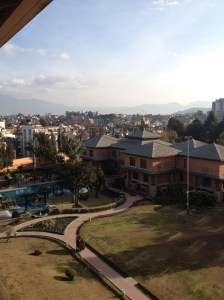
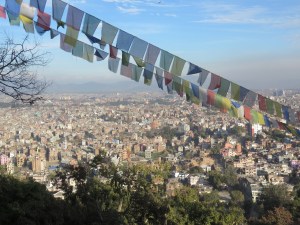
Arriving in Kathmandu, a taxi collected us for the trip to the hotel. I watched Kathmandu rattle by. No multi-lane highway here, just roads congested with vehicles–picture your favorite bumper-to-bumper traffic jam, but it’s all small cars (no trucks at all, pick-up or otherwise), and it’s moving steadily (more or less) at about 30 miles an hour. And instead of pavement, it’s a dirt road, rutted and bumpy. Add to this, a hundred motorcycles, all weaving in among the cars, zipping in and out, many with two riders, often with two adults and a child between. By the way, they’re all wearing helmets. That’s Kathmandu.

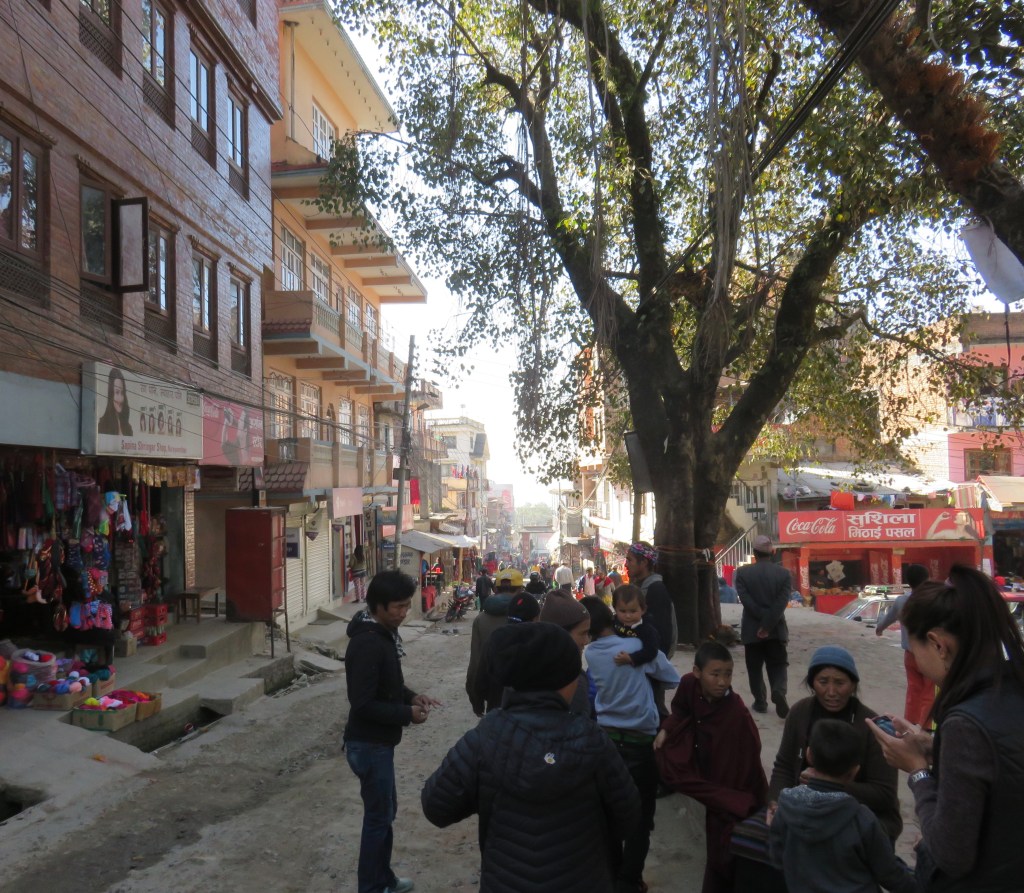
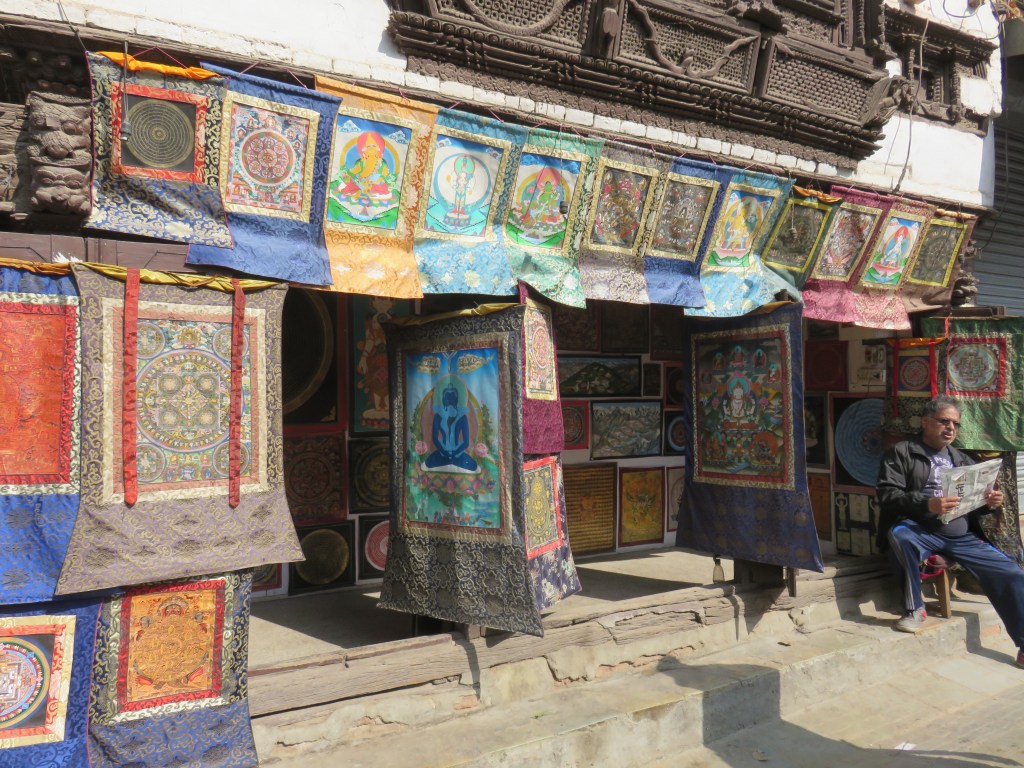

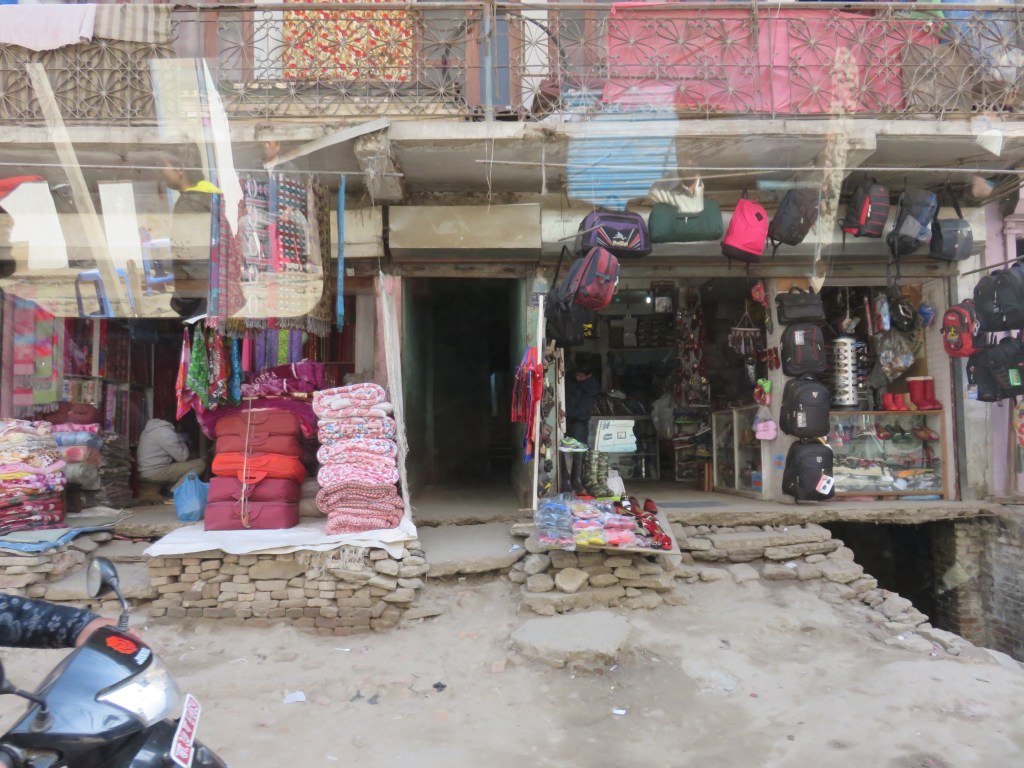
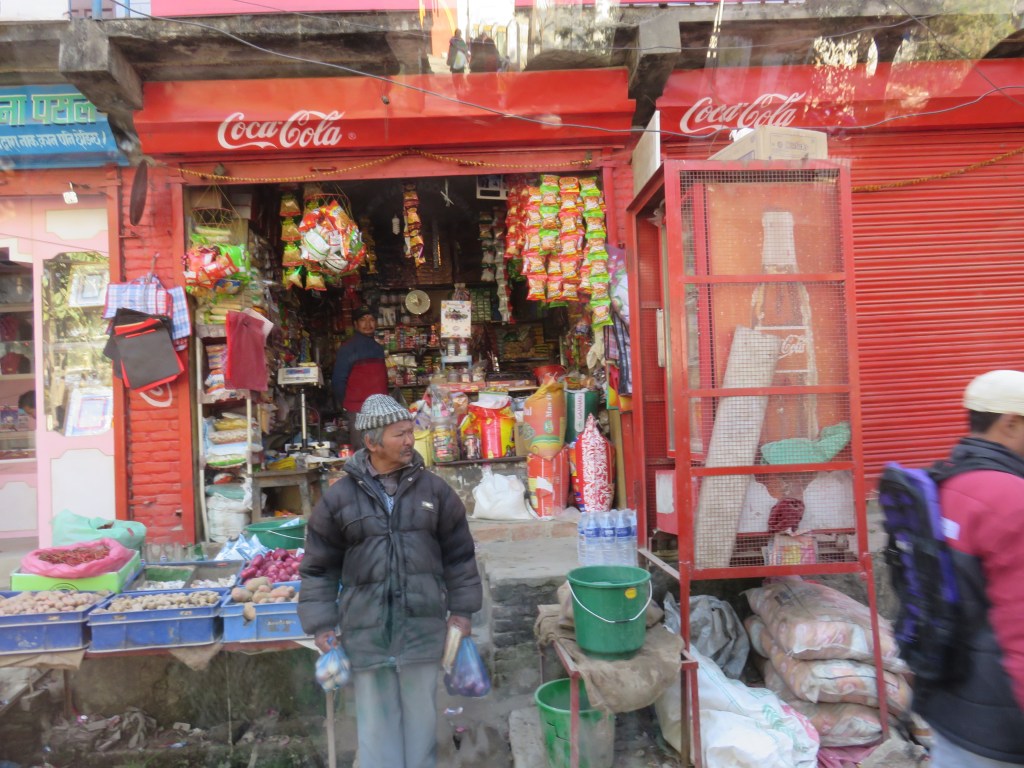
The streets are lined with buildings, mostly brick, often brightly colored, and in the market streets, little shops are cut like slivers into the buildings, their fronts completely open to the chaotic street. In one street you might see bolts of cloth stacked in the doorway and lining the walls, bursting with kaleidoscopic color; next door stainless steel ladles and pots hang glittering in the sun. Another shop offers scales, hanging in a neat row; next door to this, a pile of chickens, heads lolling, stacked in a pyramid on a plain wooden table; and next door to this, half-mannequins dressed in jeans, and fleece jackets on hangers.
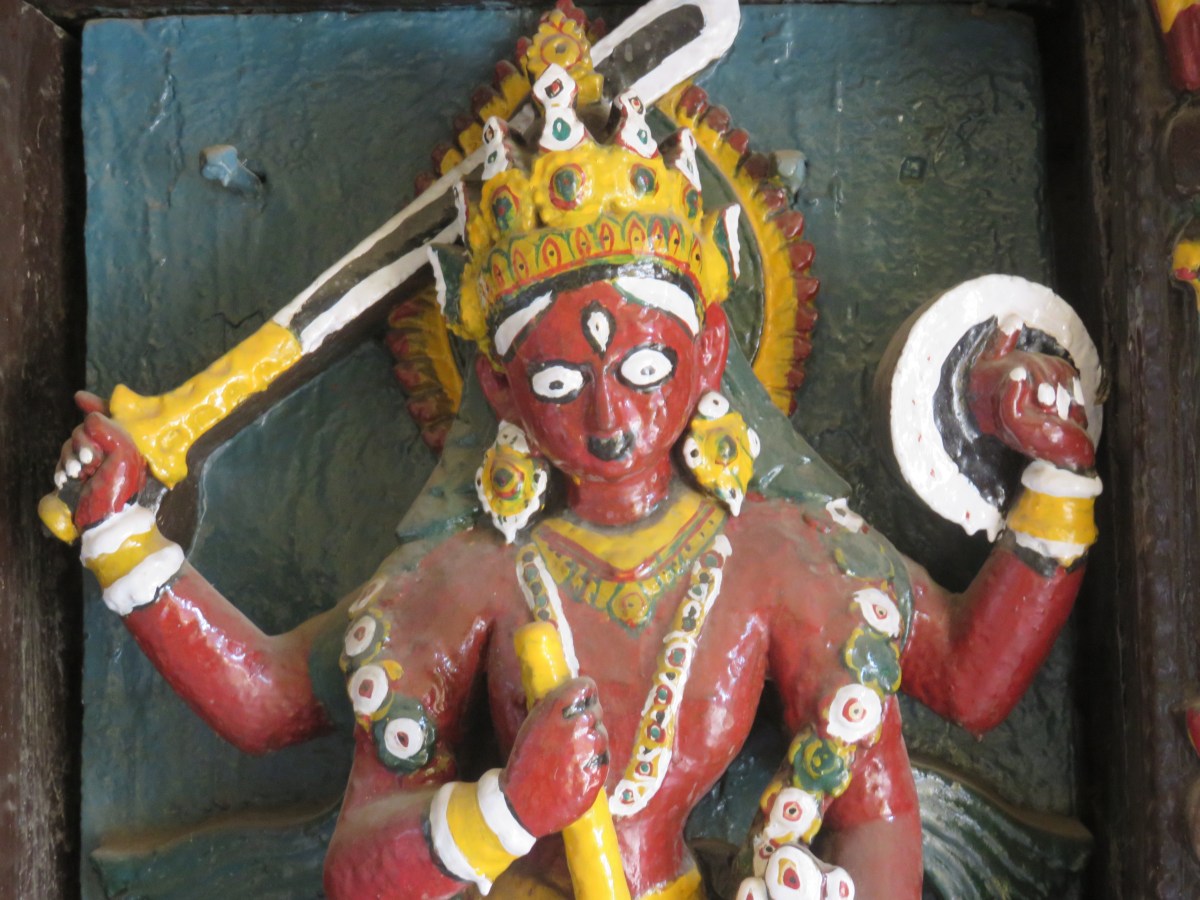
The taxi bumps and grinds its way along the street, dodging motorcycles, trying to avoid holes in the road and pedestrians, some in traditional clothes, walking obliviously with a load of goods towering high on their heads. Roadside shrines are everywhere…niches with statues of deities or small structures for deities to hide in; sometimes they are just small statues next to a building or right by the road.
The next morning, some of us set out on a tour of Kathmandu, guided by a young engineering student. We began at the Budhanilkantha Temple, where the Hindu deity Lord Vishnu sleeps on a bed of serpents in a pool of water. It’s said that a farmer was plowing a field when he discovered this massive stone image of Vishnu buried in the soil. We received blessings from a holy man who marked our foreheads, and then we put our shoes on a rack and got in line to visit the Lord Vishnu. In front of Vishnu, people placed all types of offerings, but mostly rupees, and every so often, the attendant would scoop up armfuls of rupees and put them in an offering box
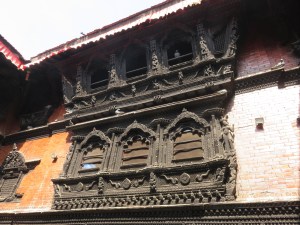
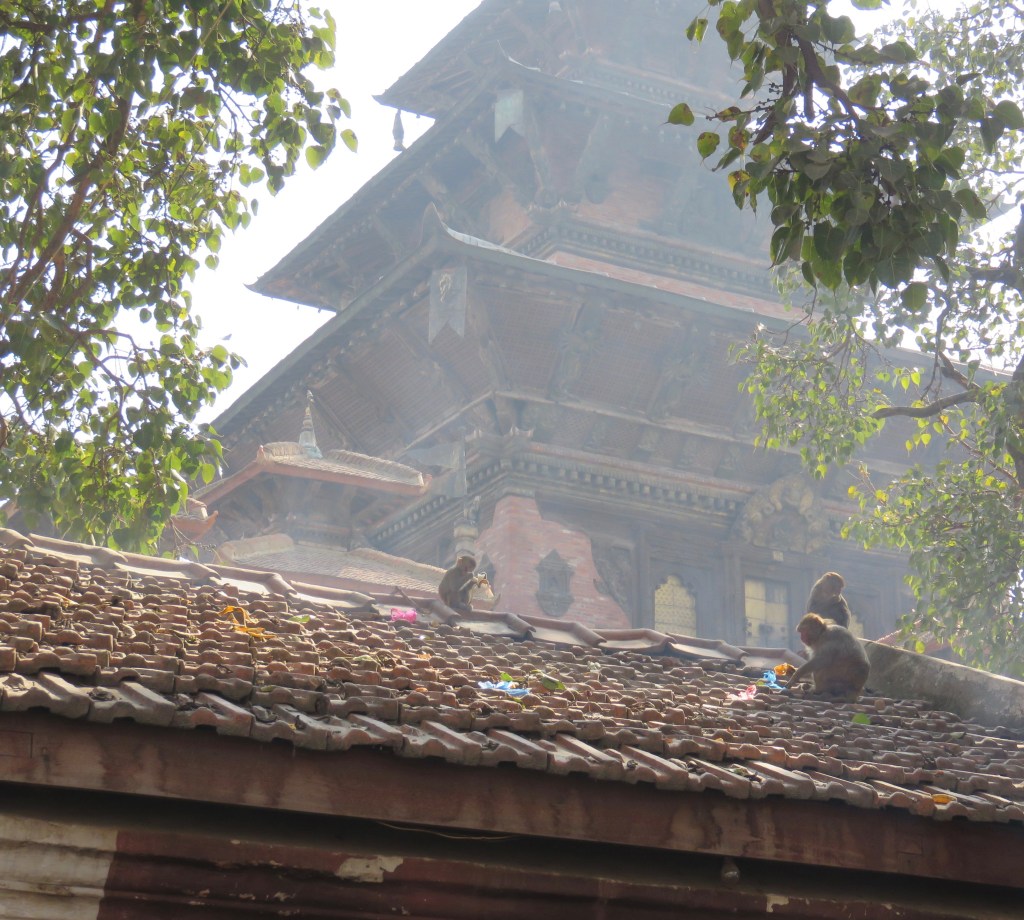
Our next stop was Durbar Square, the former palace of the Nepali royal family and an area of many temples, where we walked around. You could easily spend hours here visiting all the temples and shrines. The buildings are all hundreds of years old. One of the holiest is Kumari Ghar, where the living goddess Kumari lives. Every year a young girl, aged maybe 10 or 11, is selected to become Kumari, and she lives in this temple. She does not go to school, and only occasionally on holy days goes out to bestow blessings. When her time as Kumari is over, we were told, the girl goes back to normal life—how does one go back to “normal life” after a year of being revered and worshipped as a living goddess? We glimpsed her as she looked out over the interior courtyard.

In the evening, we were to go to dinner at a restaurant called the Anatolia. In the hotel drive, we boarded a large coach bus and set out, but part way there, the bus stopped. We had to get off and board another smaller bus because our coach bus couldn’t fit through the narrow street. The smaller bus drove awhile then stopped and we walked the rest of the way. Luckily we didn’t have too far to walk in the dark—there are no streetlights, and the shops along the way were generally illuminated by one small light bulb.

Arriving at what looked to be a shop, we were led inside and up the stairs to the second floor restaurant. Inside, the large room had bright pink walls hung with paintings, and rows of tables, set up to accommodate our group. Along the street-side wall, other diners were trying to enjoy their meals as we all trooped in. Apparently the restaurant did not understand how many people were coming, because talk making its way around the room hinted that they did not have enough food for all of us! But no one was concerned and some of our group went shopping down on the street while we waited for our meal.
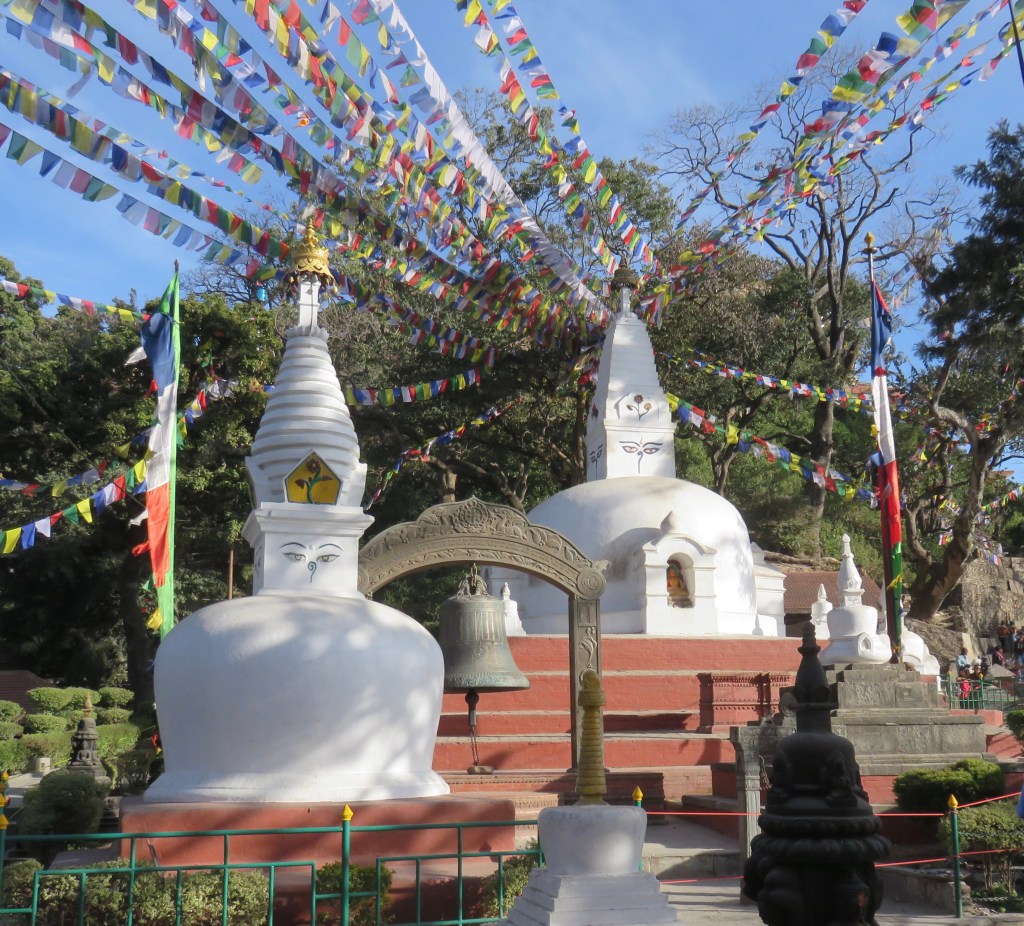
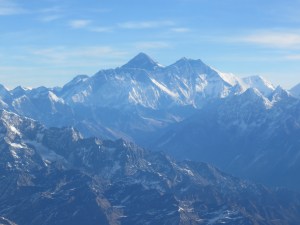
Our whirlwind tour of Kathmandu included visits to Bouddhanath Stupa and an aerial visit to Mount Everest before heading back to London and ordinary life.
 Linnea Arold Michel