I have decided to own my writer’s block—the reason I haven’t posted in a long time, since January. I have felt incompetent, like my writing is silly, frivolous, worthless. I’ve been ruminating on this for months, turning the idea over and over in my mind, poking at it. I’ve come to see that writer’s block is more than mere “fear of the blank page”—it’s complicated.
Our “fear of the blank page” is fear of writing—fear of what happens when we write, of what might happen after we write, fear of what might happen if someone ever reads what we write, fear that our writing might be less than perfect. But is that all it is?
If you google “writer’s block”, you will get thousands of hits. My admittedly cursory review finds that many of the hits are lists: 15 surefire strategies to beat writers block! Thirty techniques that work! Most offer ways around writers block, ways to trick your psyche into writing, showing you how to crawl in through the back door, by working on character development, for example, plot lines, or eavesdropping on characters, even simply skipping the first sentence of the story and starting in the middle. (How is that less frightening?)
My googling led me to Maria Konnikova’s New Yorker article, “How to Beat Writer’s Block”. She describes the 1940s work of Edmund Bergler, a psychoanalyst who believed that writers who are blocked should seek psychotherapy because it is their subconscious issues that are blocking them. Later, Yale University psychologists Jerome Singer and Michael Barrios conducted a study of blocked writers, and found that all were unhappy, though for different reasons. The writers they studied fell into four categories: an anxious group, an angry group, an apathetic group, and a negative group. All the groups were found to lack motivation to write and their ability to create mental imagery was decreased, but these problems were rooted in different issues among the groups.
Of the anxious group, Konnikova says, they “felt unmotivated because of excessive self-criticism—nothing they produced was good enough—even though their imaginative capacity remained relatively unimpaired…they could still generate images, [but] they tended to ruminate, replaying scenes over and over, unable to move on to something new.”
When I read these words, I wanted to grab my tinfoil hat because someone had been peering into my mind. The novel I have been thinking about has been stalled while I replay the opening scenes over and over. Indeed, I considered and reconsidered this post many times before I sat down two months ago to begin typing it out, and since then—well, let’s just say I’ve continued to “revise” and “edit” it in my endless quest for perfection.
In the research study, the blocked writers were given prompts to work with, which over time alleviated their blocks. The upshot is that creative work can itself be a kind of therapy, and just writing can be the path through writers block.
Natalie Goldberg inherently understands this, although she has said she doesn’t believe in writer’s block. In her book, Wild Mind: Living the Writer’s Life, she acknowledges the subject by distinguishing waiting and procrastination. Waiting is when you’ve been working on something, percolating it, but “procrastination is pushing aside or putting off writing. It is thinking the moment is tomorrow.“ Waiting is “when you are letting writing work on you…Waiting is when you are already in the work and you are feeding it and being fed by it. Then you can trust the waiting. Do not use the excuse of ‘waiting’ for the right idea or story in order to begin. That is procrastination. Get to work.”
This is Goldberg’s approach, writing as practice, as discipline—just write, write through it. When you think you can’t write, just write, write in notebooks that no one will ever read, keep your hand moving. 10 minutes. Go.
I have procrastinated for years. Although writing has always been what I do best, the fear and perfectionism it engendered made me put it off—until I’m older, until I have more life experience, until I have more education or knowledge. The right moment to write was always tomorrow. But the clock ticking away in the empty nest must have triggered something. If I don’t have enough life experience by now—in my mid-60s—I never will. The time for procrastination was over, and a couple years ago, I began trying to write again.
But procrastination isn’t all of it. Stress—whether induced by cataclysmic life events, work, or family issues—gets in the way of writing, blocks us in a different way. Lately, I may want to write, but something always gets in the way of writing: the “shoulds” of my life—all the things I should do before taking the time for myself, to write. Even if I sat down to do “10 minutes—go!” the shoulds would overwhelm and defeat my writing.
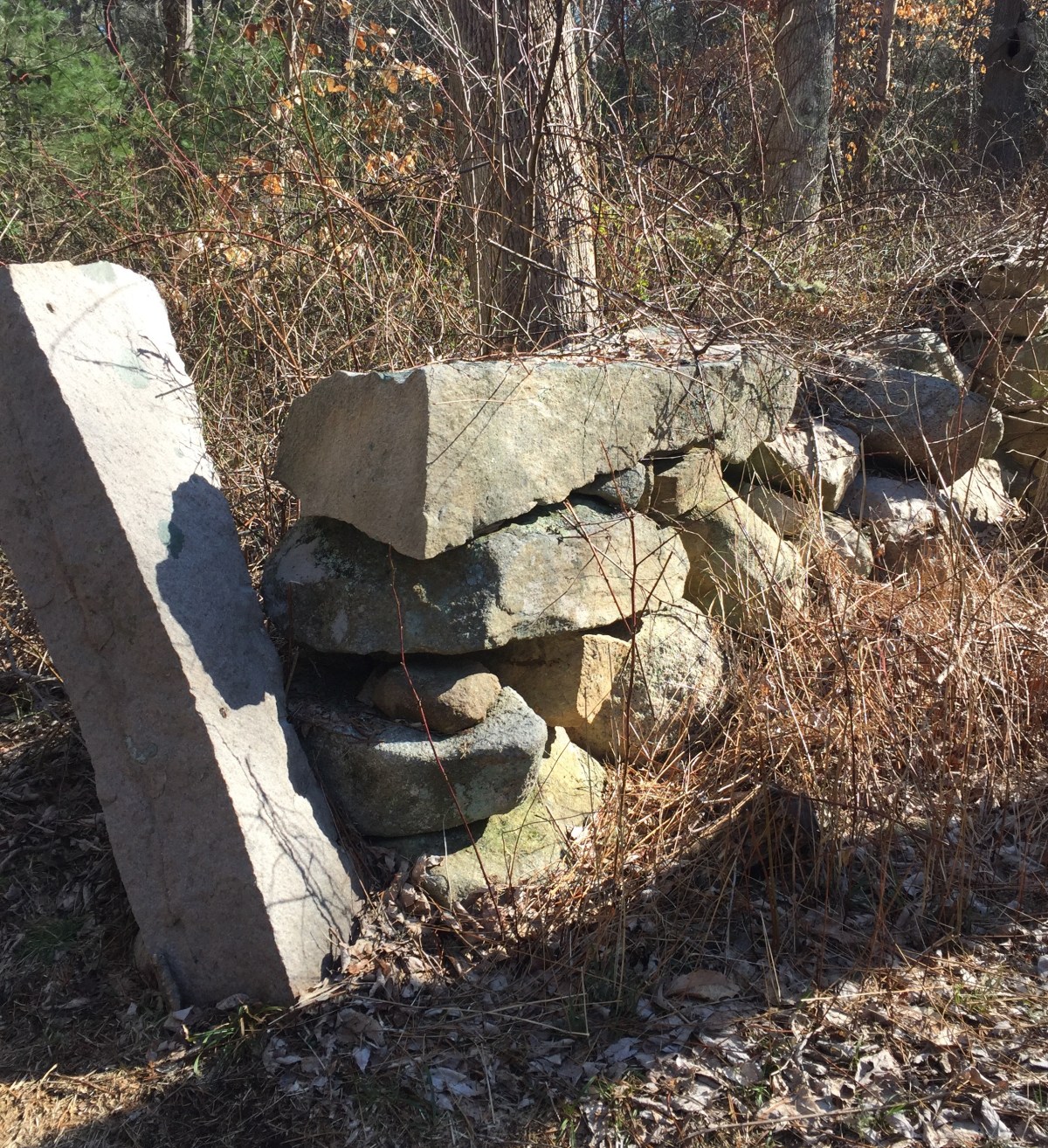
I’d thought of writer’s block as a block—a huge cube that I must clamber over. But that’s not it. Writer’s block is more like a New England stone wall, trailing through woods, meandering across the countryside, intersecting with other stone walls, like a maze. The wall is made of my fears, pain, angst, as well as the stress of life. It keeps me contained like a sheep in a pasture. But time and gravity will push stones, and some will fall away, creating a way out. But to find it, I must keep writing.
 Linnea Arold Michel