Book Review

Down with the System: A Memoir (Of Sorts)

by Serj Tankian

Hachette Books, 2024

ISBN: 978-0-306-83192-8   hardcover   $30.00

I remember clearly the first time I heard System Of A Down. In 2019, not too long after my hiatus from music ended (read that story here), I was driving along a country road on my way home from my office with the radio cranked up loud on SiriusXM’s Octane rock music channel. The DJ was talking about System. I wasn’t paying attention—I’d never heard of them.
“Disorder! Disorder! Disor-or-or-der!” the vocalist screams.

What the hell is this?

The song was “Toxicity”, and boy, did it grab me—fortunately, I was still able to find my way home despite being enthralled by the song. I also heard “Chop Suey” and, my favorite, “Aerials”, over the years, but the band’s been quiet since System’s last two albums, Mesmerize and Hypnotize, were released back in 2005. I confess System dropped off my radar until this spring, when my daughter sent me a link to an NPR.org story about Serj Tankian’s memoir. Book in hand, I dove into System’s discography on Spotify, listening to songs and albums as Tankian discussed them in his book.

Serj Tankian’s book, Down with the System: A Memoir (Of Sorts), is a great read. Do you have questions like: What do System’s crazy lyrics mean and where does their amazing  sound  come from?  What  makes  Serj Tankian tick? What does the name, System Of A Down, mean? Why isn’t the band touring and recording new music? And what does Armenia have to do with it all? Down with the System has some answers for you.

Tankian begins his story at its roots—his family’s life in Armenia, and their struggle and suffering at the time of the Genocide (dated at 1915-1917). They fled to Beirut,  Lebanon,  where  Tankian was born (1967), only to be uprooted once again by the Lebanese Civil War that began in 1975. “If you want to understand anything about me, my life, or even System Of A Down, you need to understand the Armenian Genocide,” writes Tankian. And to help with that, he gives a good dose of the essential history.

Immigration to America had an immense impact on Tankian. In so many immigrant families, children effectively live in two worlds—the school world of American culture and language, and the “old world” of their parents whose limited English and unfamiliarity with American ways can put them at risk of unfair and potentially costly situations. 

Tankian’s family was no different. They faced the legal ramifications of a business decision his father made, and, during his high school and college years, it fell to Tankian to help his parents deal with the lawyers and the courts.Then, after college, he took a job in his uncle’s jewelry business. 

During that time, messing around with a keyboard was initially a stress reliever, but it evolved into to a hard-core romance with music. Seizing opportunities to make music, Tankian fell into a band that led to one of those innocuous-seeming, but ultimately life-changing meetings (think John Lennon’s first meeting with Paul McCartney): Tankian met Daron Malakian, an Armenian-American kid who “ate, drank and slept music.” When that first band faded away, Tankian and Malakian, their chemistry undeniable, started another band, Soil, a seminal effort that paved the way for System.
Tankian took all that legal and business experience gleaned while helping his family and created a successful software business to support his music. It gave him a steady income and eventually provided space to allow System to grow  musically while developing a crucial fan base. Ultimately, when music demanded more of his time than the business allowed, he sacrificed the business to focus full-time on music.

“[T]he only thing in my life that felt like it was  mine  was music,” Tankian writes. Life in Beirut with “bombs raining down” and his family’s experiences taught him that “[S]afety and financial security is a mirage. It can be taken away just like that … Music or art … felt more meaningful … Art … just is. … The way it makes me feel—or the way it makes someone else feel—is the whole fucking point.”

System’s music is “loud, heavy, political, artsy, and weird,” and the band’s tour with Slayer ahead of their first album release was “like going to rock ‘n’ roll boot camp” and a“real trial by fire.” But the lesson Tankian took was not what you might expect. “If there was one valuable lesson … it was this: don’t be neutral—it’s boring. … To me, that’s really the mandate for any kind of art. Don’t make neutral art and don’t make neutral music—that’s for elevators and malls. At the very least, make people feel something.”

Social and political commentary is integral to System’s identity. All of the band’s members are Armenian-Americans, and Tankian was first, and remains, an activist. “I made a promise to my grandfather that I’d keep telling [the] story [of his grandfather’s experience during the Genocide]… I also connected his struggle to a wider fight against injustice and inequality not just for Armenians but for everyone and everything. … You could say that activism has always been in my blood …”

Whether art should marry activism is subtext throughout  Tankian’s  memoir. While reading it, I was reminded of Picasso’s magnificent, horrific  painting,  Guernica, painted as an argument against war. Art can force us to look at truths we may prefer to avoid; we cannot look away. Tankian and System Of A Down draw us in with often insane lyrics and music that runs the gamut from folk melody to discordant noise. But when the last note fades, we’re left feeling—and thinking. 

Tankian’s fascinating book reveals him as a complex, inner-directed artist with an entrepreneurial enthusiasm and curiosity that animates his life beyond System. Some will follow the threads of Tankian’s  understatedly competitive relationship with Daron Malakian through the book, looking for reasons for the band’s silence. But creative alliances have their ups and downs (again, think Lennon and McCartney). That Tankian writes of System in the present tense throughout the book bodes well for the band’s future, though it will probably continue to be complicated. 
I highly recommend Down with the System

Book Review

Bodies: Life and Death in Music

By Ian Winwood

London: Faber & Faber Ltd, 2022

ISBN: (e-book) 978-0-571-36420-6

We’ve all seen the headlines about rock musicians dying unexpectedly. All too often we learn in the follow-up that he or she died of causes related to substance abuse and/or mental health issues. Why does this happen again and again? In Bodies: Life and Death in Music, Ian Winwood attacks this question.

Winwood writes, “This is a book about. . . music, musicians, the industry, mental health, addiction, derangement, corrosive masculinity, monomania, overdoses, suicide and a hectare of early graves. . . . But in writing this story, I’ve come to regard artists as victims and survivors of circumstance. In pursuit of a living wage, musicians are required to work themselves into the ground.” At its base, he posits, music is a “proper job” that does not pay a proper wage.

Bodies serves up an indictment of the parasitic relationship between the music industry and those who would make a career in it and the substance abuse that fuels it. In this engrossing yet disturbing read, Winwood strives, he says, “to join the dots. . . . There is something systemically broken in the world of music. It’s making people ill.”

A British music journalist whose career has included more than twenty years writing for Kerrang! and major UK newspapers, Winwood has interviewed members of Metallica, Green Day, Nine Inch Nails, Pearl Jam, Guns N’ Roses, Mötley Crüe, Foo Fighters, and the Smashing Pumpkins, plus many more whose names are yet to—or may never—become household words. He has lived a rock-star lifestyle, giving him keen insight into how rock stars and wannabes survive. . . or not. Winwood has watched musicians fly to the heights, but he has also seen them crash and burn. And he has been to the depths himself as well.

The book opens with Winwood’s 2003, world-exclusive interview with Metallica following a six-year break during which the band had issued no new music. It’s “my job to discover exactly what has been furring the arteries of one of the most popular bands on the planet,” Winwood says, and the burning question, of course, is why the silence? What went wrong? What went wrong was alcohol.

Metallica was one of the first bands Winwood saw live, at age 15, following their release of Master of Puppets. To support his music habit, Winwood worked two jobs, including one in a bookshop, where he discovered Kerrang! When, later, his mother asked him what he might do with his life after school, he replied, “I want to write for Kerrang!” With his mom’s “I don’t see why not” response, he determined to make it happen, attending a university journalism program and then hand-delivering his first-ever article to Kerrang! and other outlets in hope of getting a writing job. A job offer resulted, though not from Kerrang!

But the call does eventually come and within the week, Winwood is on his way. Life with Kerrang! is full speed ahead. Move fast, write fast, live fast. Turn in a story, head off to the next one. Jetting around the globe, following bands and musicians, Winwood has visited nearly every city you can name. During his career, Winwood has been at the rail, in the pit, and with the musicians backstage and offstage, talking with them about their lives and the music industry. Indeed, his frenetic pace matches that of the bands he interviews, and like the musicians he hangs with, his coping mechanism becomes alcohol and cocaine.

The narrative is woven with anecdotes from Winwood’s many interviews, as well as his own experiences on the road for Kerrang! Throughout, his close relationship with his father anchors him. Ultimately, Winwood believes, the circumstances surrounding his father’s untimely and unexpected death precipitate his own plunge deep into the maelstrom.

“I’m comfortable asking awkward questions; if required I will do so repeatedly,” Winwood writes. Interviewing Layne Staley, vocalist with Alice in Chains, at the time the band was promoting their album Dirt, Winwood was warned not to ask questions about drugs, but he did so anyway. Staley, Winwood says, was “the first obviously damaged person I’d ever met.” Interviewing Ozzy Osbourne in 2011, Ozzy tells Winwood that he could still get drugs anywhere in the world in under 15 minutes. On the other hand, there’s Motörhead’s Lemmy Kilmister: “Lemmy is an anomaly. He was the one who was in control.” Eschewing heroin, Lemmy’s tolerance for alcohol made him “the kind of drinker who never seemed to get drunk.” In the end, Winwood says, ”I think it was the cigarettes” that got Lemmy shortly after his 70th birthday.

Not long after his father’s death, Winwood is on his way to California to interview Green Day and finds himself stuck in Las Vegas due to a flight glitch. The ubiquitous flow of alcohol and his pursuit of cocaine land him on the wrong side of his appointment for his Green Day interview. For many journalists this would be a career-ending disaster. But through the good graces of the band’s press agent, catastrophe is averted. The band’s label spends a pile of money to fix schedules and rearrange flights, and Winwood finally arrives to his interview, where he’s immediately handed a drink. “It would be wrong to say that all [was]forgiven. . . . I was never really in trouble in the first place. No one ever is,” he writes. A month later, Billie Joe Armstrong, Green Day’s frontman, checks himself into rehab after his own Las Vegas debacle. This stuff is simply normal in the supernormal world of music.

Careening out of control, even his editors at a magazine where chaos is routine, begin to express concerns over Winwood’s increasing lapses. The dream job begins to slip away. When a nightmare hospital stay turns out to be real, leaving Winwood with no memory of anything that transpired, he begins to awaken to the direness of his situation.

Through Winwood’s unique lens, Bodies disentangles the whys and hows of this “normal.” For this book, Winwood plumbs the archive of his interviews with countless musicians over the years. Patterns begin to emerge. The lack of accountability in the music industry, the shifting responsibility, and the casting of musicians as mere commodities that can be cast aside if they don’t produce, the relentless show-must-go-on ethic, and of course, the industry’s focus on its bottom line, as opposed to the musicians’, whose cut of the profits is ever smaller—these combine to create an environment where artists are driven to take advantage of whatever is available to keep go-go-going in their own pursuit of success.

At the time he was writing Bodies, Winwood had recently interviewed Dave Grohl, former Nirvana drummer and Foo Fighters founder. Winwood writes that, in founding Foo Fighters, “Grohl worked hard to ensure that his and his group’s happiness and security would no longer be put at risk by the wild vagaries of an overwhelming and unpredictable industry.” But even that “wasn’t quite enough to prevent drummer Taylor Hawkins from taking a near fatal overdose” in 2001. With painful irony, around the time Bodies was going to press this past spring, Foo Fighters were on tour in Colombia when Taylor Hawkins died, with toxicology reports indicating a variety of drugs in his system.
Winwood doesn’t offer a fool-proof solution, and indeed, Bodies raises many questions for musicians and bands, the industry, and fans to consider. For example, do labels bear responsibility for artists’ mental health, and if so, what tools can labels use to support artists? What part do fans play? If a band pulls the plug on a tour for mental health reasons, will fans continue to support the band, hold on to rescheduled tickets, buy merch? If pay structures for musicians change, are fans willing to pay the higher ticket prices that will almost surely result? Will the industry itself evolve sufficiently to reduce mental jeopardy for artists? And what about independent musicians?

Winwood’s book is an engrossing, can’t-put-it-down read. It pulls you in; it’s captivating, for it has the highs, the lows, and even a few happy endings where bands—Chumbawumba of “Tubthumping” fame and Biffy Clyro, for example, as well as Winwood himself—have been able to save themselves and preserve their sanity and, at the same time, their art.

If you care about bands and musicians, Bodies is a must-read.

Thanks to James Kennedy (@JamesKennedyUK), independent musician, founder of the band Kyshera, and author of Noise Damage, for putting me on to Bodies via his podcast interview with Ian Winwood; find the James Kennedy Podcast wherever you get your podcasts or visit Spotify.

In Flames!

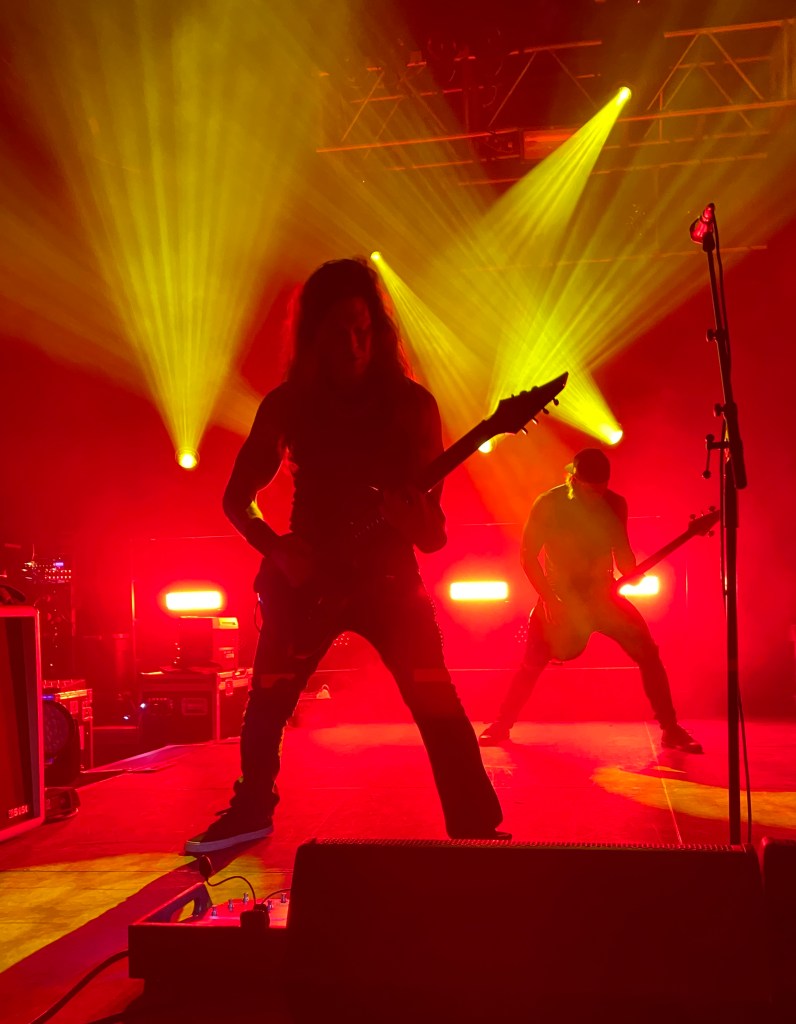
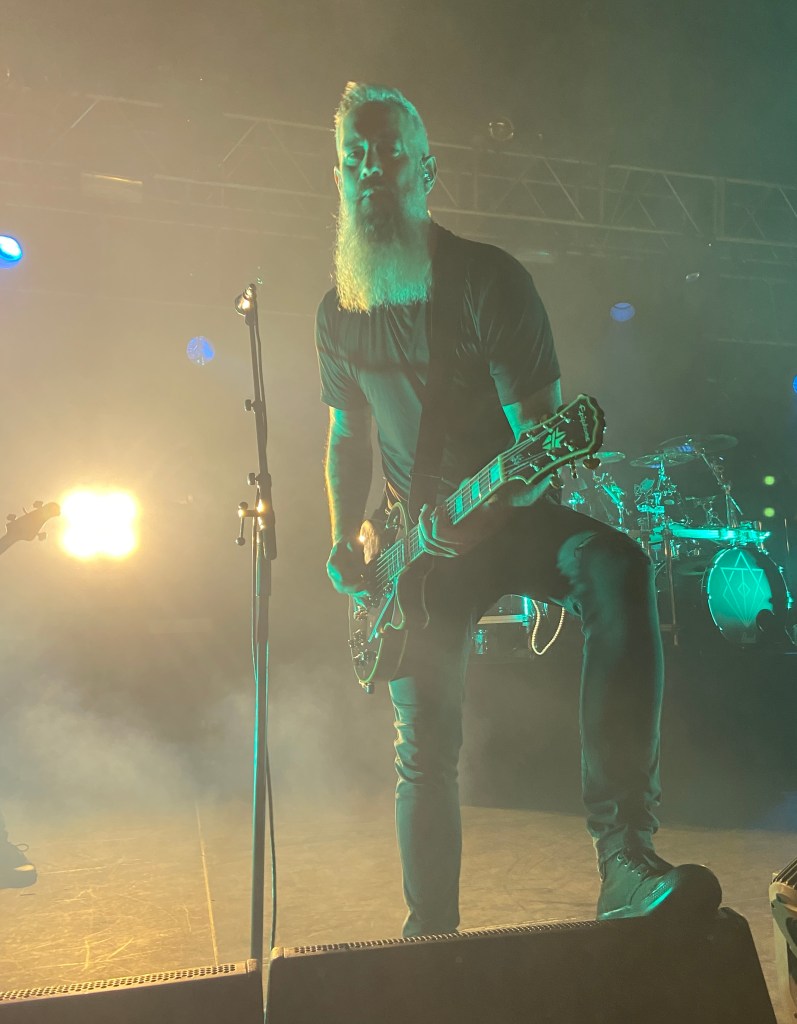
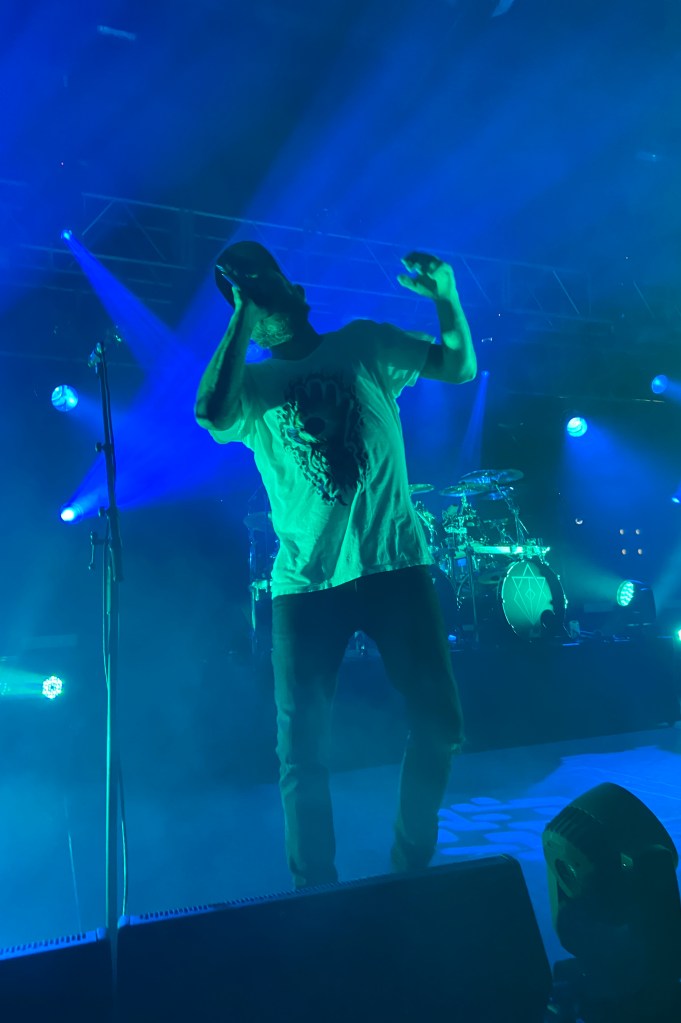
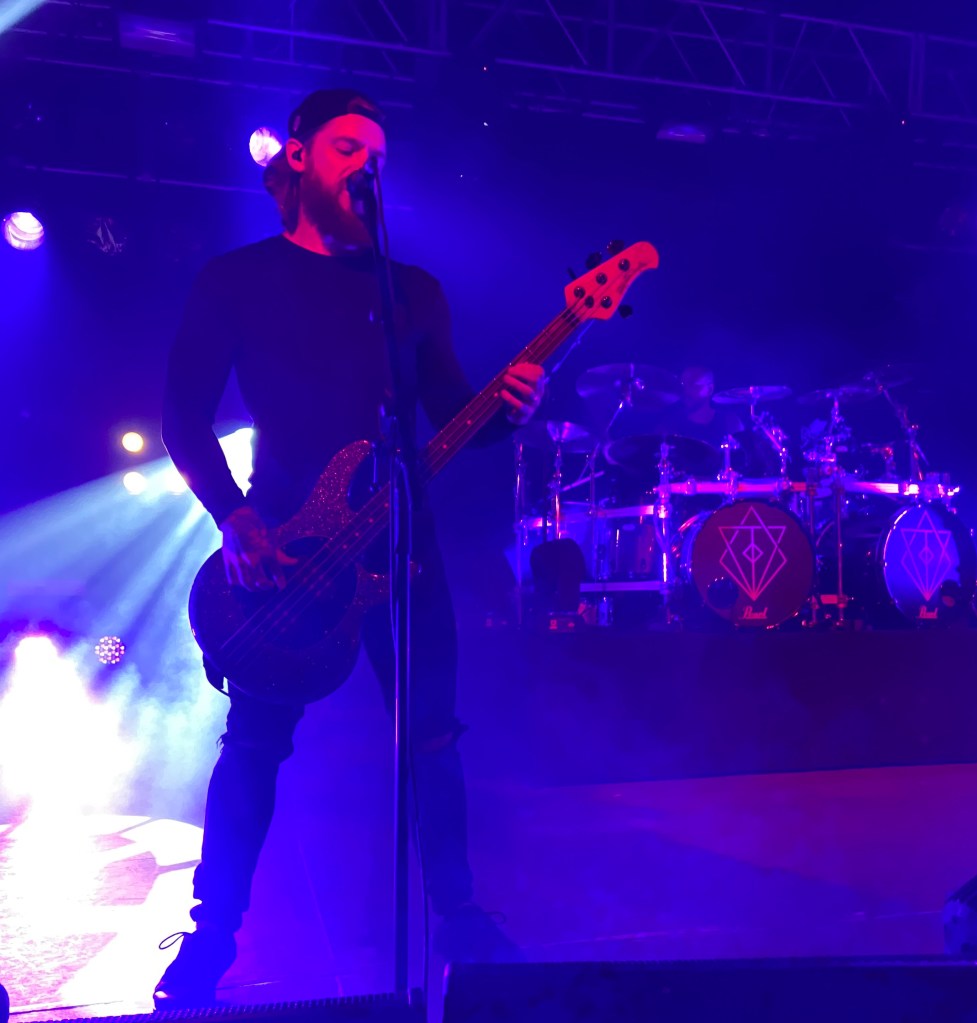
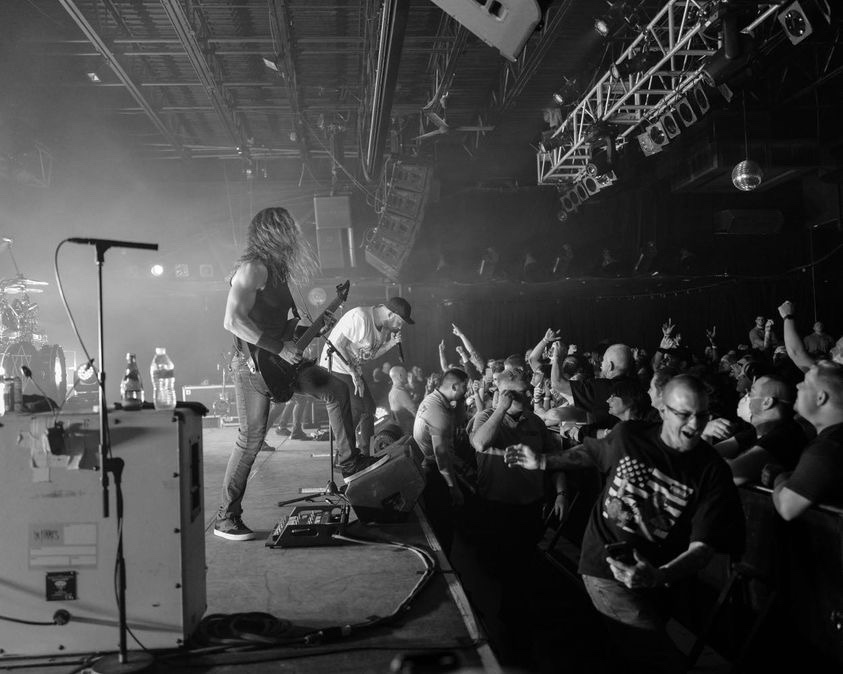
In Flames, Starland Ballroom, Sayreville NJ, September 8, 2022

Supported by Vended, Orbit Culture, Fit For An Autopsy

Anders Fridén was relaxed and full of energy as he and In Flames took the stage at the Starland Ballroom in Sayreville NJ, on Thursday, September 8. Anders took us through a tour of In Flames metal history, with the band playing songs from several of their earlier albums (1994’s Lunar Strain, 1996’s The Jester Race, 1997’s Whoracle, and 1999’s Colony). To be honest, as somewhat of a newbie, I think I was the only one who couldn’t sing along with those songs. (Working my way backwards through their catalog, I’m only up to A Sense of Purpose, with a detour to Clayman).

In Flames also played their two most recent releases, with Anders promising a new album is the on the way—can’t wait for that!

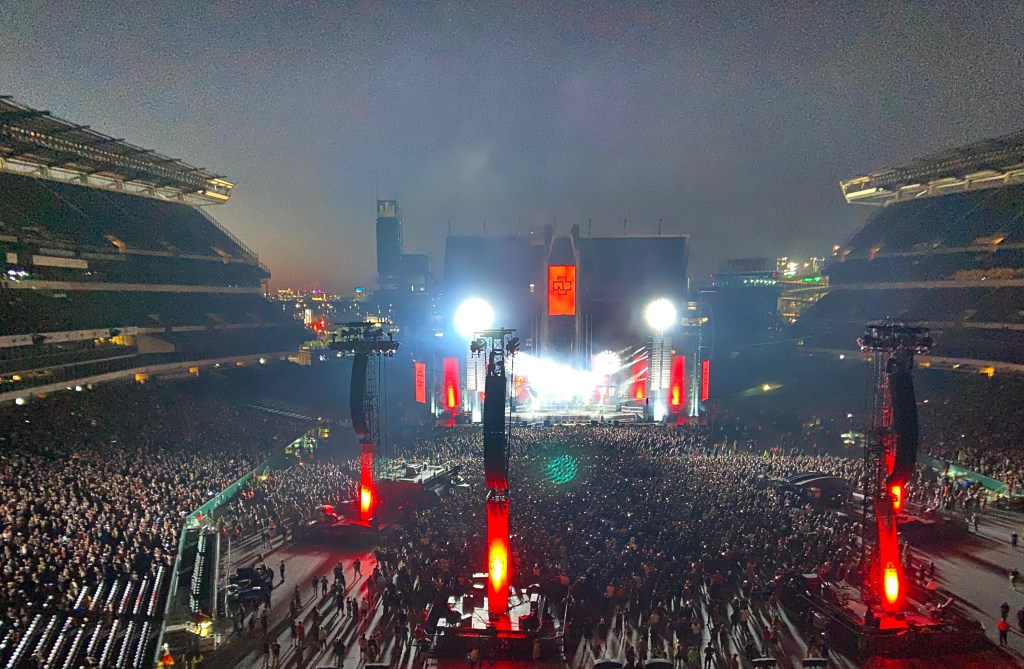
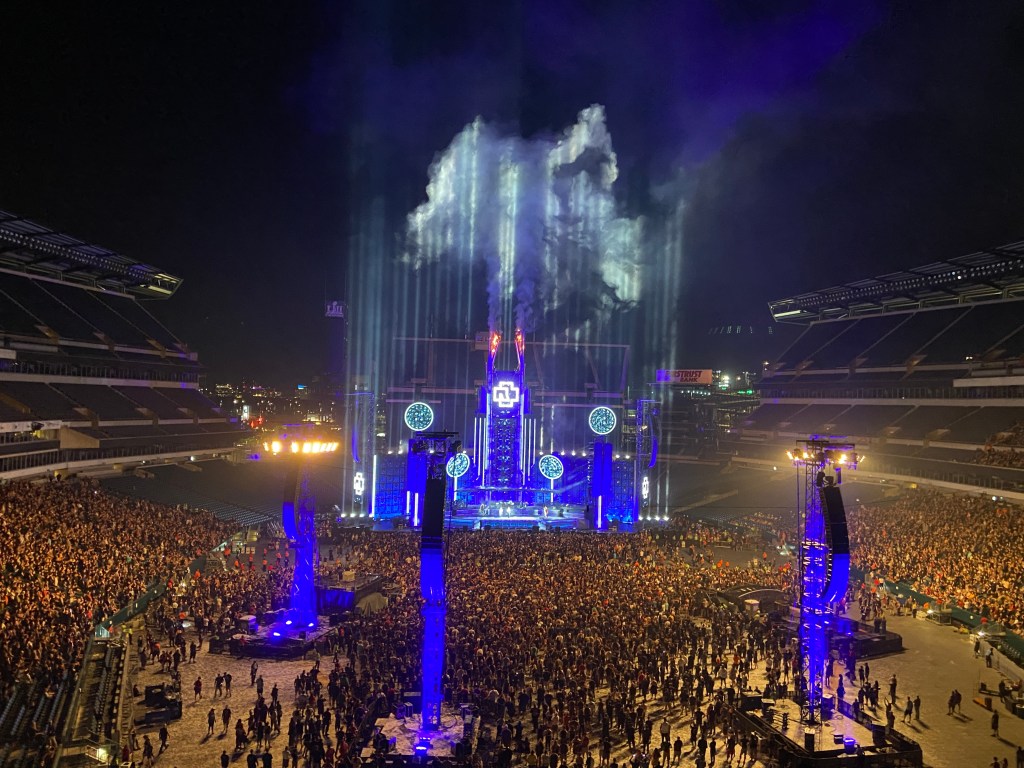
This show was in sharp contrast to the Rammstein show we saw the week before. Rammstein’s arena show was a fantastic display of the band’s particular kind of artistry, but its grand scale prevented any sense of connection with the band.

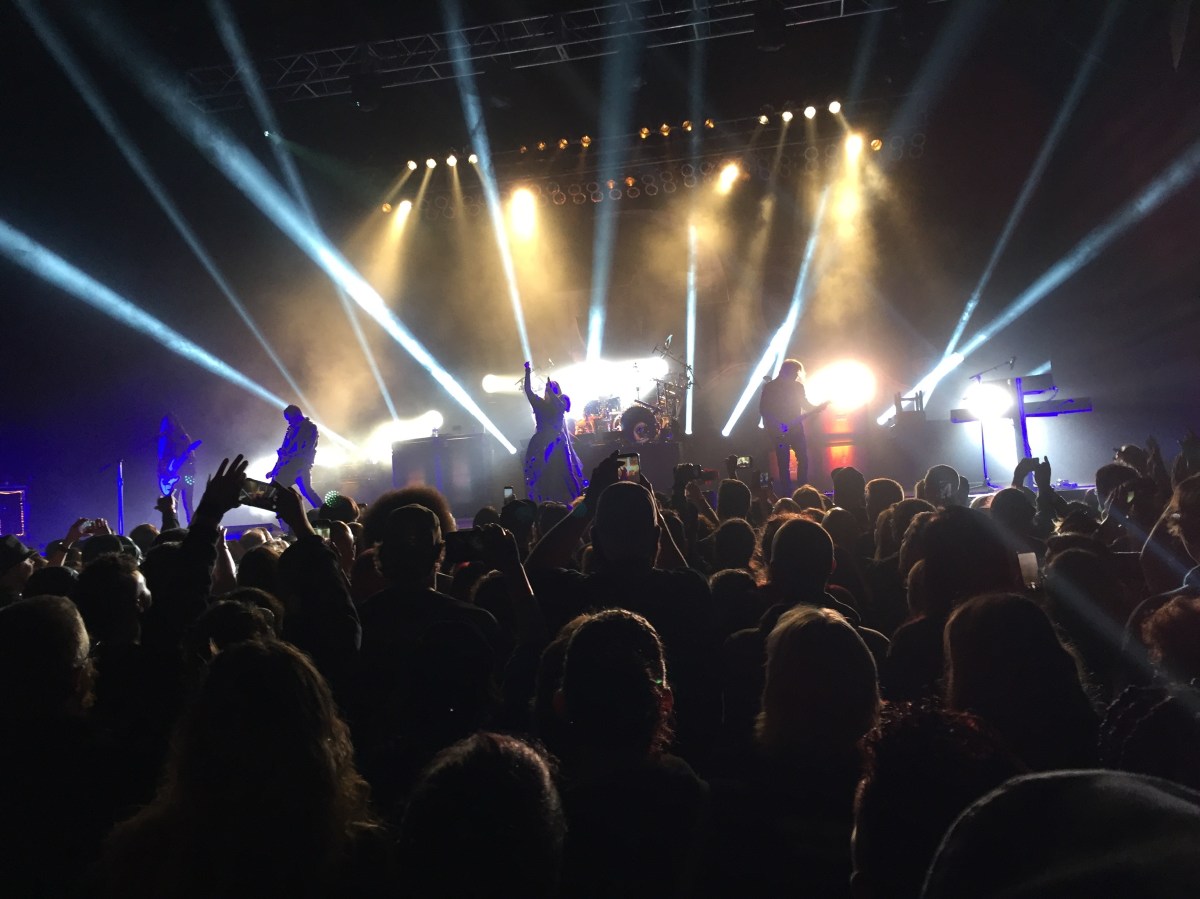
Not so on Thursday. Anders’ easy banter, the mix of old and new songs, the fans’ over-the-top enthusiasm, and the intimate size of the venue, made for an exhilarating night. Well warmed up by the supporting bands, fans immediately got down to moshing and crowd-surfing, and the turned-up-high bass made sure every molecule in the room was bouncing.

In Flames was supported by Vended, Orbit Culture, and Fit For An Autopsy, all new to me—but not to the crowd—and I will be checking out their music further, especially since our pub waitperson the following night told us he was a big fan of Vended.

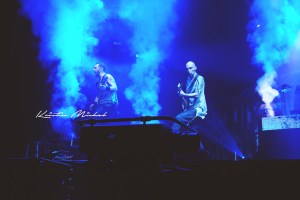
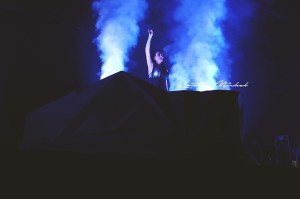
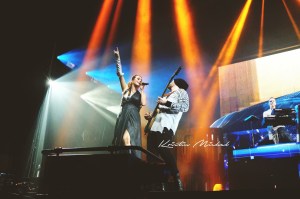
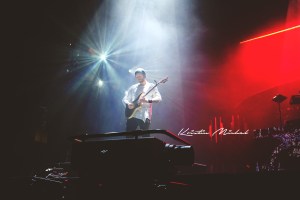
Here are a few of my pictures, but my daughter, photographer Kristin Michel, has far better ones; visit her Facebook page.

This photo by @robertsiliato besutifully captures the energy of the night (and I’m so happy to be in this picture)!

Rammstein at last!

Rammstein

Lincoln Financial Field, Philadelphia, PA

August 31, 2022

I have been aware of Rammstein for a long time, possibly from 1998, when the band was banned in Worcester, and Till Lindemann and Christian “Flake” Lorenz spent a night in jail. I suspect that event may have put them on my radar as a bad boy metal band, as it certainly would have been news in puritan New England. (Check out stories by Revolver Magazine and the Worcester Telegram & Gazette.)

I bought Metal Hammer’s March 2019 issue for a story on Within Temptation. The issue featured Rammstein on the cover, and I read every word of that story. Something about them resonated with me. Maybe I understood them as committed artists who were uncowed by critics and unintimidated by authority, or maybe it was simply because they knew how to play with fire. If they toured anywhere nearby, I was going to be there.

New Year’s Day 2020 drew to a close, and my daughter and I wanted to make 2020 as great a year musically as 2019 had been. Scrolling through Ticketmaster looking for shows, we found Rammstein’s North American Tour. Knowing it would be a flaming good spectacle, and having been severely let down by our Iron Maiden nose-bleed seats located so far to the side that we could see nothing of the action on the stage, we bought the best center seats we could afford, and my son-in-law agreed to join us.

Then in March, pandemic.

Rammstein’s tour was postponed, and postponed, and postponed. But now, at last, three years later, here we are!

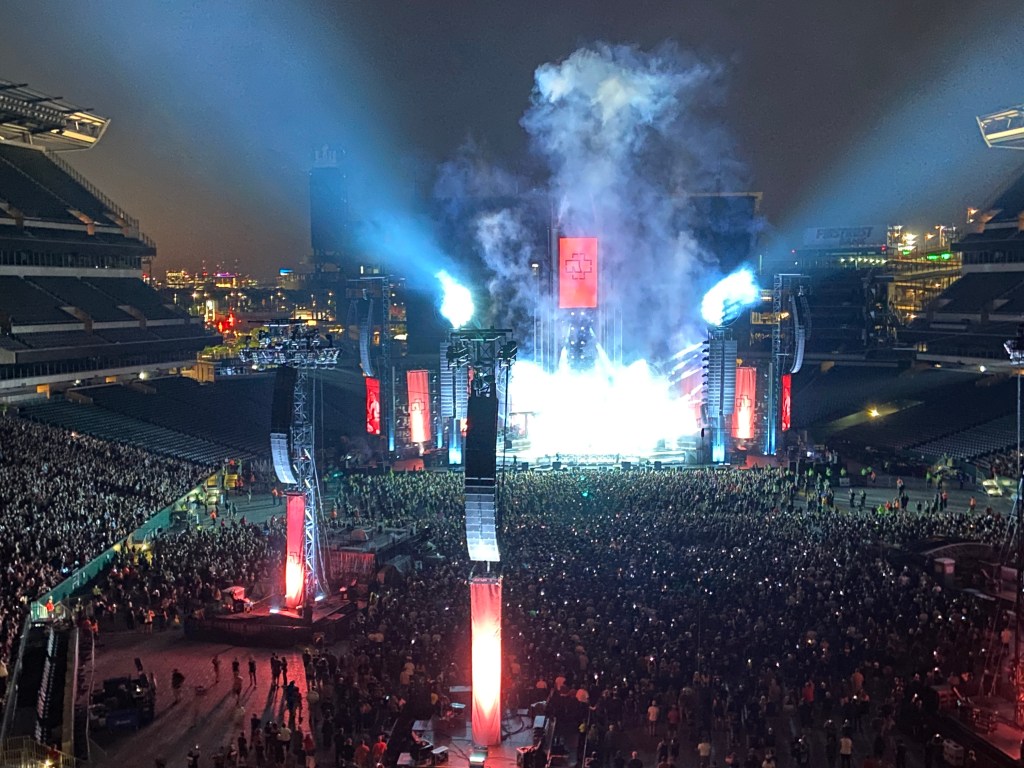
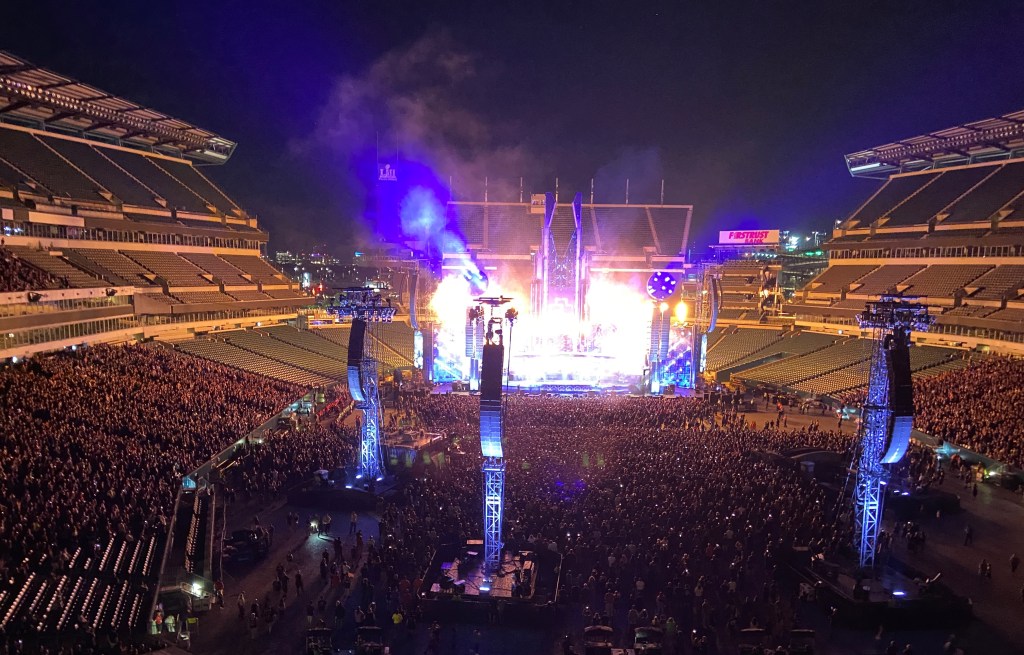
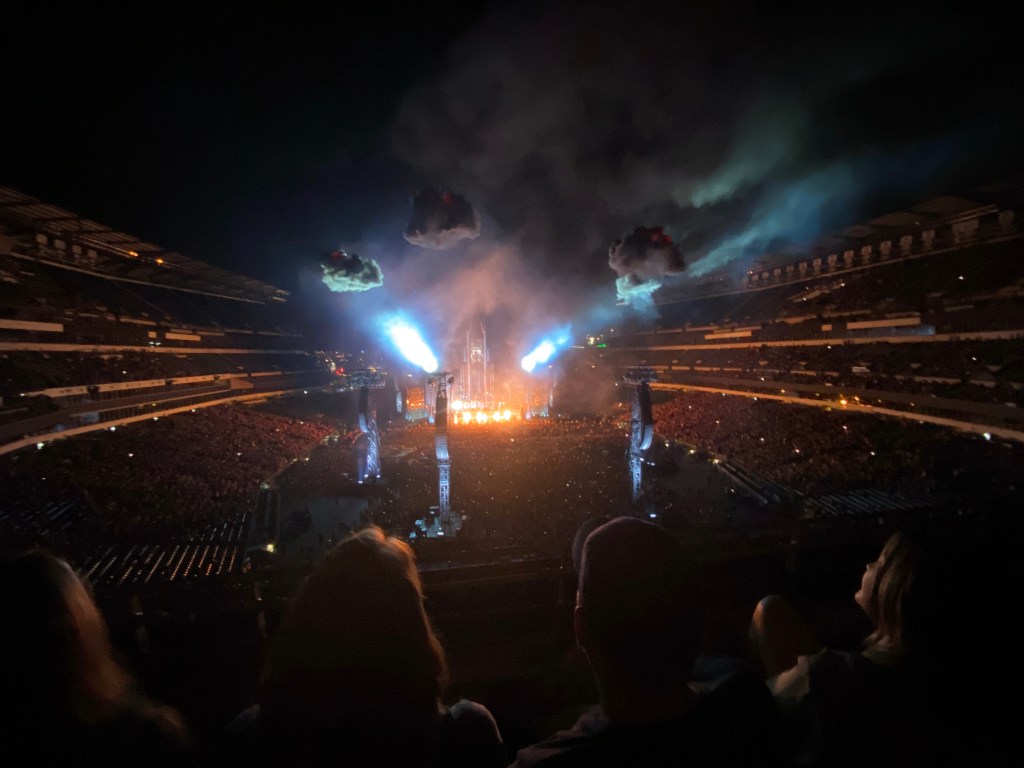
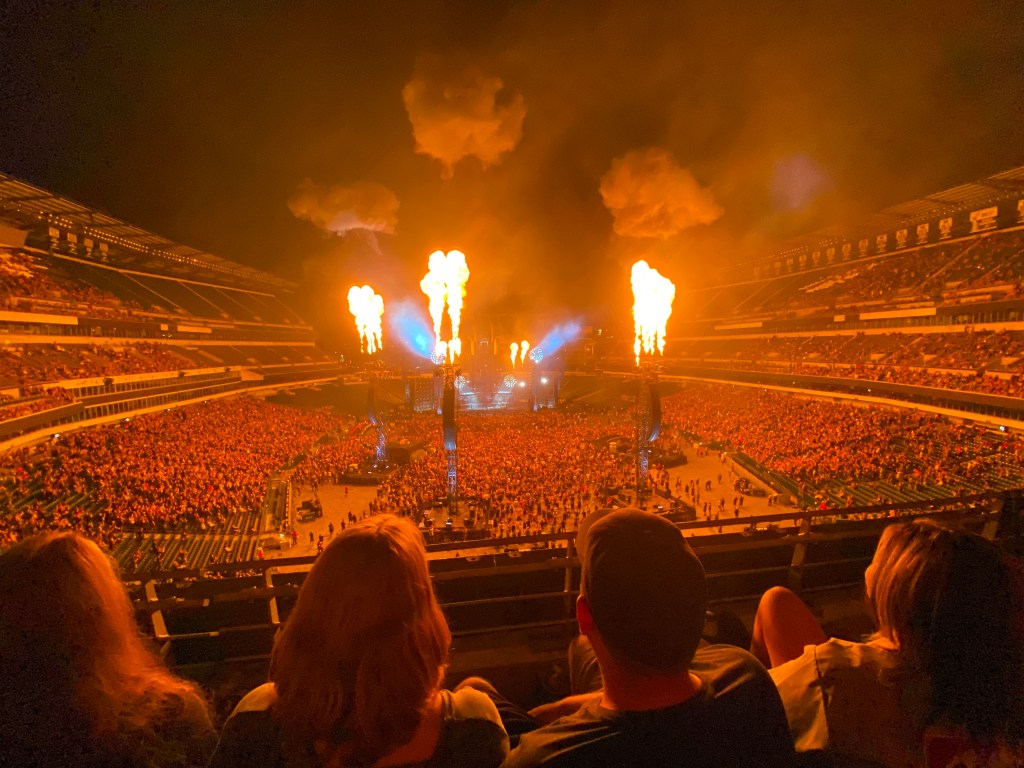
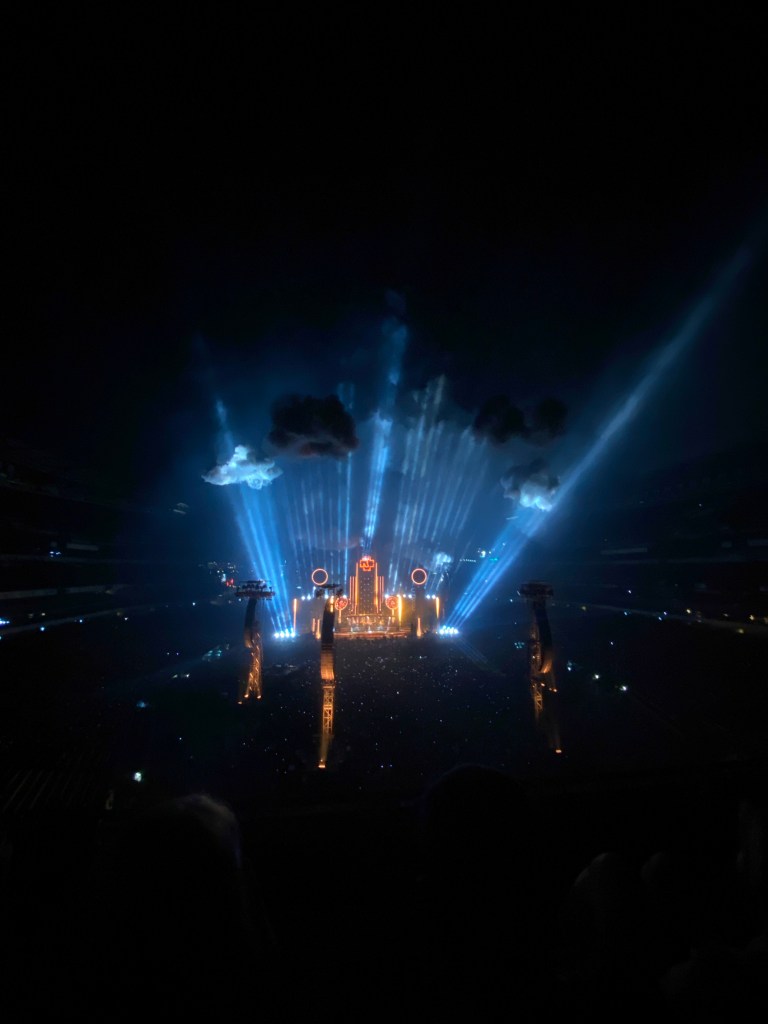
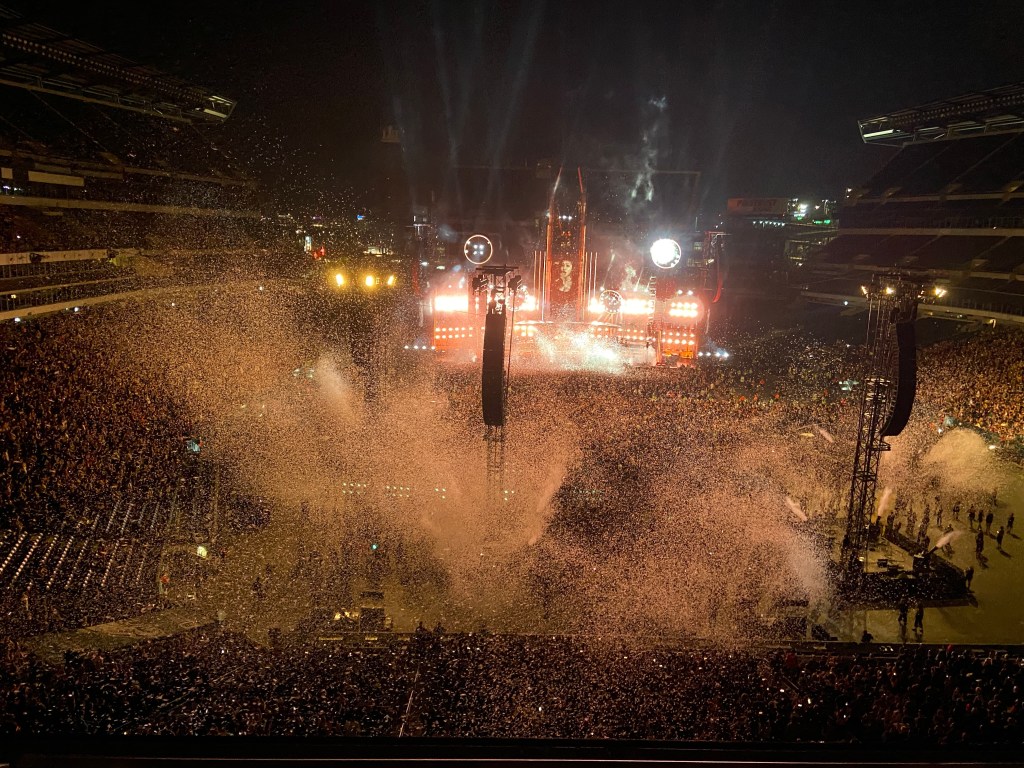
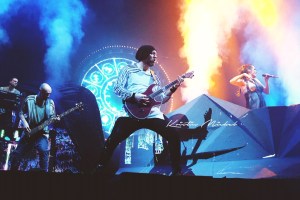
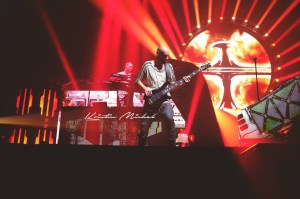
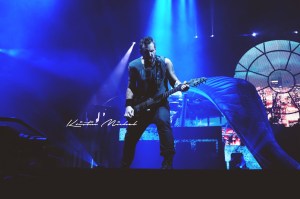
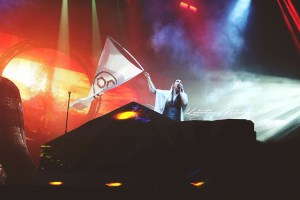
On Wednesday night, I was expecting spectacle. But this spectacle was far beyond anything I have ever witnessed in my life. It was performance art—breathtaking—quite literally. At points, I sat there transfixed in my seat, holding my breath in anticipation of what could possibly come next. The music pounded, pummeled, rumbled, and skewered us. Till’s sonorous vocals ranged from throaty whispers to screaming rage. And the fire! Did I mention there was fire? Incredible pyrotechnics toasted us even up in our aerie seats.

Here are a few of my pictures. You can find more by Bill Raymond/Digital Noise Mag here. The setlist is here, and Kerrang! has an article discussing Rammstein’s 20 greatest songs, many of which were included in the show.

#MerryMusic: Music for Your Happy Holidays, Christmas, Solstice, etc.

I’ve never been a fan of the standard “Christmas music” and its overworked carols and drummer boys and what not. I’ve always hunted for music that’s a little different. Out of my collection of “holiday” or winter music, assembled over the last 30 years or so (yes, there are few New Age CDs in there, an awful lot of Celtic music, plus one lonely Josh Groban), here are some that sing to me right now.

The most recent addition to my collection is Tarja Turunen’s From Spirits and Ghosts. Tarja is the former Nightwish vocalist and a true metal goddess, but this album is not what most folks think of when they think “metal”. This was the first Tarja CD I bought last year, because I found her rendition of O Come, O Come Emmanuel online (after discovering her through Within Temptation), and it is hauntingly beautiful (the video is, well, haunting). I have always found Christmas to be a bittersweet holiday, and Tarja captures that perfectly. Operatically trained, Tarja’s soprano is sweet indeed. Try Feliz Navidad.

For more of that moody, bittersweet quality, I love the old folk hymn, I Wonder as I Wander, as sung by Mary Travers of Peter, Paul and Mary, on A Holiday Celebration with the New York Choral Society. This 1988 album is a wonderful collection of less-often-heard songs, including a couple of Hanukkah songs and of course, Blowin’ in the Wind.

A heavy holiday isn’t complete without the Trans-Siberian Orchestra. I’ve had The Lost Christmas CD for many years, but it was buried in the back of the cabinet. So glad I dug it out! I love Siberian Sleigh Ride, but the whole album makes for a real head-banger’s holiday.

We bought Renaissance Holiday (presented by Chip Davis of Mannheim Steamroller fame) back when our daughter was in marching band, and imagine our surprise when her band music ( Volte by Praetorius) popped up on one of the tracks! It’s been a favorite holiday CD ever since, always bookended by those other Mannheim Steamroller classics (Mannheim Steamroller Christmas and Christmas Extraordinaire) that are so familiar now.

My list would not be complete without the poignant Christmas in the Trenches, by John McCutcheon. I discovered John McCutcheon’s Winter Solstice when I first crossed into unfamiliar “winter music” territory back in the ’80s. The song tells the true story of the Christmas Truce during World War I. Here’s another take on the Christmas Truce story (as told by Doctor Who).

Lastly, in my continuing hunt for new music, here’s a holiday track, Seasons Change, from Circlefour, a rock band from the Midwest US. They’re pretty new to me, so I’ll have more to say about them in coming posts.

So there you have it–a few of my favorite things, musically speaking, for the holidays.

May your holidays be merry & bright! Rock on!

#MusicMonday: What I’ve Been Listening to Lately

Discovering some new-to-me music…

Helion Primea sciency power metal band from California, has a new album out, called Question Everything, and the title song could really be the anthem for some of us these days. Mary Zimmer’s vocals are beautiful (joined on the title track by Heather Michele, their former vocalist), and as I listened, I kept catching interesting lyrics that sent me back to the liner notes for more info. The track that really caught my attention is “Photo 51”; how many other song lyrics do you know that contain the words “research” , “phosphate chain”, and “science”? Not many! (Check out the lyric video, and you can find out why Photo 51 matters—fascinating stuff!) The album is built around a group of science heroes—Albert Einstein, Alan Turing, Rosalind Franklin, Katherine Johnson (sadly the women’s names are less familiar) and others—whose dogged pursuit of truth has advanced our understanding of the universe. 

Myrath is an Arabic progressive metal band from Tunisia, recommended by my friend Zaina Arekat (you can check out her music here). Myrath is the first band from their country to sign with a European label. Mostly in their present line-up since 2007, but rooted in 2001 when founder Malek Ben Arbia was 13 years old, Myrath has heavy guitars, strings, cool vocals mixing English and Arabic—all coming together for a fantastic sound. Their most recent album is 2019’s Shehili. Try these beautiful, mysterious videos, “Dance” and “No Holding Back”.

TaleTeller is a Hungarian symphonic metal band that focuses their albums around a single story cycle.  Sárközi Edina,their female vocalist, has an exquisite voice. Their new album, The Path, is due out December 21. Check out “Aurora”. 

Finally, I cannot deny my regular craving to spin an In Flames disc every so often—they’ve really become my go-to band when I need music to make the day better. Lately, it’s Sounds of a Playground Fading.  The first time I read the title of the album I knew I would buy it; I could not resist the poetry of the title. This album is among the first of the “new age” In Flames. While I enjoy some unclean vocals and screaming, I do need a good melody and great lyrics. This album points to the new path In Flames has chosen, and I love it. In Flameswe trust!

Covid-19 Notepad – Day 49 What we risk losing

The media has been much concerned of late with the idea of re-opening the economy, as states begin to dial back their stay-at-home orders and lockdowns. We were told these would “flatten the curve” and protect the healthcare system from a fatal crash. We have hunkered down to slow the spread of the virus. The deaths—of friends, acquaintances, loved ones, the bodies bagged and stacked in makeshift morgues—have terrified us, motivated us to stay in, stay home. 

Now (though we are surely not out of the woods yet), we begin to contemplate a new normal, where restaurants are half full, crowded bars are a distant memory, flight attendants wear masks, and we take a number to enter grocery stores. BBC News just ran a story about travel in this new world, complete with an airport disinfectant scenario straight out of Doctor Who

As we hunkered down, bans on large gatherings were among the first social distancing strategies put in place. Now it’s been suggested that such gatherings may not be allowed this year. Suppose, for the sake of argument, the bans on gatherings of 10, or 100, people remain in place for a year, two years, or longer. As we shrink our worlds to avoid the risk of infection, what becomes of concerts, performances, readings and so many other events, and the artists and artist communities that these support?

There was a time when this would have mattered less to me. I wasn’t going out to events much. But that trek to Groningen, Netherlands, to my first live rock concert ever, drastically changed my perspective. We were welcomed into a community—the metal community—where we stood shoulder to shoulder, hands raised, utterly carefree and full of life, singing the songs together as though we were singing hymns in church. What becomes of this community if we can no longer gather?

Large gatherings like this, whether 20 people for a poetry reading or 20,000 for a heavy metal concert, are intrinsic to every arts community.

If we have learned nothing else from our national experiment with Zoom meetings, it is that in-person is just better, whether it’s a meeting with colleagues, a trip to the ballgame or a concert.  Relegated to the camera’s view, we lose a powerful world of nuance and non-verbal cues, of closeness and camaraderie. But perhaps especially for art, it is that personal, real-time experience shared with others of like mind that cements our relationships and unites us into community.

While community brings people together, it also serves a another purpose. Communities sustain the artists around which they form, and the music community is no different. Indeed, artists and their art-making have generated vibrant communities around the world, helping to reinvigorate cities everywhere and making arts a vital economic engine that can help ensure the continuation of independent artists making art for the joy of making art. 

If we lose large gatherings, we risk losing the arts. The sustenance these large gatherings provide to artists—emotional, professional, financial—can vanish if performance venues can’t survive the new normal.

Without a question, even in a strong economy, arts are a tough way to make a living. A lot of parents, despite buying all those music and dance lessons, have pushed kids away from careers in the arts, telling their budding photographers and dancers, “You won’t be able to support yourself.”

This economic reality is a fact of the music world, where touring is a way of life for bands, who depend on tours to generate income. For heavy metal, historically, this has been especially true, since metal has tended not to get the radio play enjoyed by other musical genres  (a topic of its own, outside the scope of this post). Few bands have the stamina and sustained creativity, to reach that elite world of musical nirvana where significant money is to be made. Before the pandemic had even started to unhinge our world view, Kobra Paige, of Kobra and the Lotus, talked about the economic realities she and her band face.

For our part as fans, we stand to lose a kind of sustenance too. We will lose the exhilarating experience of live concerts. I went so long without them, but now, reawakened, I crave them. I think about the concerts I’ve been to in the last year, that excitement, that feeling of being a part of this big, crazy family. We fed on the bands’ energy, just as the bands fed off ours to keep them going, night after night.
Vaccines and antibody tests already in development, contact-tracing tools like apps, and other public health strategies, if they work, might permit a return to large gatherings. Vaccines are undergoing trials in several countries. Apps are in development that will allow discovery of every person who stood within 2 feet of you; China has a version, UK is about to unveil one. In the US, approaches like these will encounter significant roadblocks due, for example, to our willingness to tolerate distrust in science, or to our laser focus on individual rights to privacy at the expense of the public good. From another perspective, the fear is that these strategies would “coerce” people into trying to catch the disease.

If we want to return to even a semblance of normalcy, we need to weigh our responses to public health tools and strategies with our common good in mind. We need to think about the impact of our personal decisions on others and on the communities we care about. We can no longer think solely of ourselves and our individual happiness. We must understand, now more than ever, that our happiness and well-being are tied directly to the happiness and well-being of others.

What do you think? Do large gatherings matter?

#MusicMonday

I was supposed to be in London today, attending a concert by Brazilian metal band Semblant. Since I’m not there and can’t do that, here’s more from the beginning of the journey…

After Groningen, I could not wait for more—music, live music, live metal music! And soon after we got home from Groningen, Within Temptation announced that its Resist Tour was coming to the U.S. When I saw they were coming to Philadelphia, New York and Boston, over the first three days of March, that settled it. 

The weekend got off to a great start. On Thursday, I am cruising through Connecticut along I-95, about halfway into the five-hour drive, mentally ticking off my packing list—now where did I put the tickets? Oh sh*t! Kristin had even texted to remind me to bring them, and I’d replied, sure, no problem, they’re right here on the fridge. And then I went off without them—needless to say, I’m in a panic. I get off the highway—naturally, no easy rest area or side street was handy, but I find a spot to get out of the way of traffic, and send Kristin a frantic message.  Within a few minutes, my very tech-savvy daughter has it all under control: “Electronic tickets—everything’s fine.”

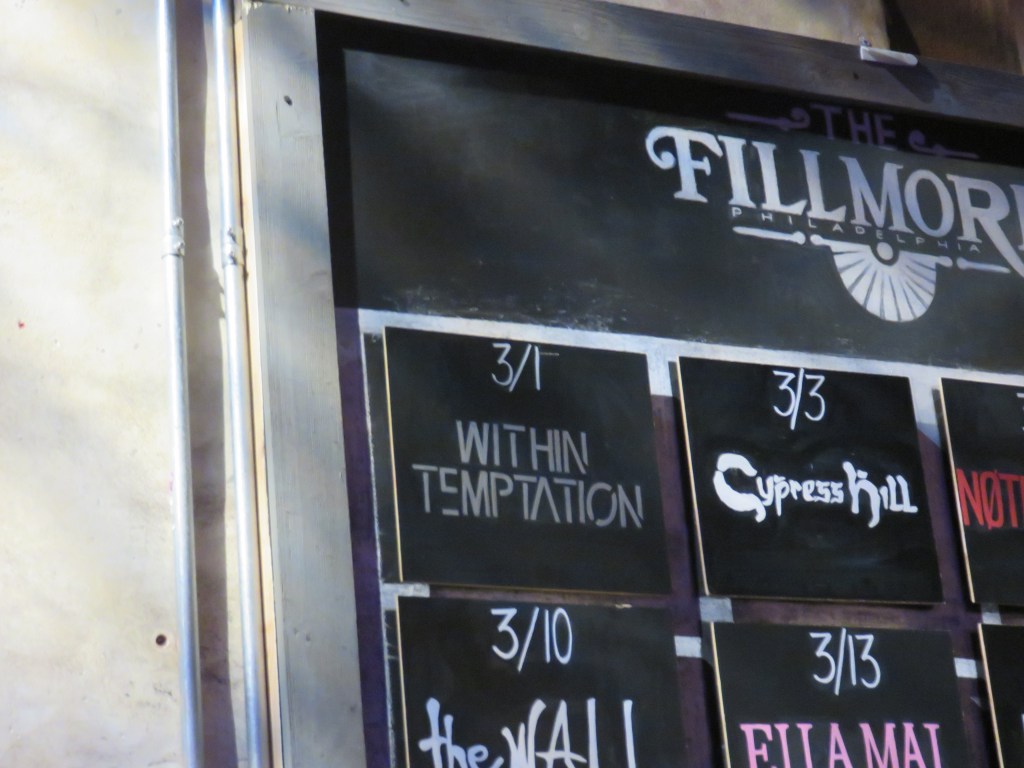
On Friday, we leave Kristin’s place crazy early for the hour drive to Philadelphia, running through Wendy’s first for what we believe will be our last meal for a long time, and then head to the Fillmore. The GPS leads us to what looks like a vacant lot with chain-link fence and barbed wire curled around the top, under an elevated highway—this is the parking? Luckily our friend from the Facebook fan group, whom we’ve never met in person before, arrives about the same time with a carload of more friends, and she knows the drill. 

For all three shows, we have general admission tickets. We are packed onto the floor like sardines, with several hundred others. Groningen was the first time I ever experienced this. When we first get inside the venue, the crowd is thin—the die-hard fans arrive early, and the rest fill in later. All kinds of people are here, all ages, from little kids riding their parents’ shoulders to oldsters like me, most wearing band Tee-shirts, many sporting fantastical tattoos, long hair, short hair, all different color hair, from gray (dyed, on twenty-somethings—why is this trendy, I can’t help wondering) to cerise to blue (like mine). Some tiny college girls behind me are long-time fans of Within Temptation and seeing them for the first time—I will give them room, just as some of the In Flames fans moved over to give me room. One of my takeaways from the weekend was just how nice everyone is; you feel like you are  crammed in with 500 of your best friends—literally.
Smash into Pieces opens the show. First out is the drummer, completely hidden under a black cape and an illuminated mask, then joined by the others. The crowd slowly warms up—it seems this band is new to everyone else as well as me. But they lead off urging everyone to jump, and before I know it we are jumping and head-banging and every molecule in the room is vibrating. In the middle of it all, their vocalist dives into the crowd. Gasps and cheers—all I can see is his feet sticking oddly above the crowd, then vanishing. They’ve dropped him! But he clambers back onto the stage and with a wisecrack, goes on.

Next up, In Flames—the vocalist’s cheeky banter with the folks over there in the middle front, the white-haired, bearded guy with the gorgeous white guitar, the bass guitarist with his slashed jeans revealing a tattooed knee, the other guitarist with wild head-banging rocker hair and incredible biceps, and the drummer going crazy up there in back—I am grabbed by the throat and pulled into the music. If this is metal, give me more! 

When Within Temptation comes out, they are as spectacular as I remember them, and this time, I sing along on many more songs. And when it’s over, all I can say is, “Wow, we get to do it again tomorrow!”

After the show, a clutch of us huddle together in the cold rain by the stage door, hoping Sharon and the boys will come and talk to us; she’d had some trouble with her voice initially and said she had a bit of a cold. But she does come over, and the others ask for photos.  She agrees, but says, smiling, “Go home—it’s raining! Aren’t you cold?” 

Finally we make our way to my car for the drive back to Kristin’s. The rain is turning to snow, and within a few more miles, it’s snowing heavily. We will flirt with this storm the whole weekend. 

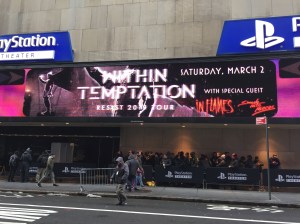
In the morning, we’re up and back in the car for the drive to New York, where we will catch the show at Playstation Theater in Times Square. We make another friend in the line at the theater. I satisfy a craving for a hot dog off a foodcart near the line. Then with our friend’s help, we secure spots at the barrier again. Some friends from Philly are here too. 

Each band pulls me into their world—the musicians deep in their music yet feeding off the crowd, the crowd feeding off them, heads banging, singing along, horns up. Red and blue light fingers explode through the haze, the floor vibrates under my feet. I never want it to end!

Between bands, the lights come up and we chat with people standing near us. In New York, In Flames had a lot fans and one guy had been a fan for over ten years, and this was his first time seeing them live. His excitement at being there was over-flowing, and caught In Flames’s vocalist, Anders Friden’s attention. Anders asked him for his phone and tried to snap a photo of the crowd but the phone locked him out. The fan was devastated. But after the set, the setlist was tossed toward us, and I caught it and gave it to him, setting off tears of joy.

With the crowd warmed up by Smash into Pieces, In Flames further incites moshing and crowd-surfing. We keep an eye out, lest crowd-surfers slide in our direction. One guy surfs 4 or 5 times, with his lime green underpants hanging out. 

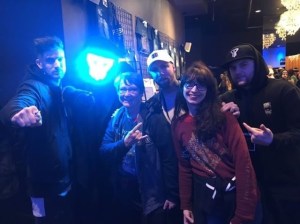
After the show, we get our picture with Smash into Pieces. The drummer is still draped in black, right down to the black makeup on his (her?) hands. Kristin and our group of friends headed outside, but I lag behind for some reason, and as a result, get to chat with Anders and guitarist Chris Broderick who are hanging out by the door. “You converted me!” I tell them and fist-bump with Anders.

After dinner at the nearby Hard Rock Café, we catch the 7 train to a Marriott in Queens for the night. And then up and out to hit the road again, this time toward home—to Massachusetts.

Sunday was perfect driving weather, with plenty of sun and not a snowflake in sight, but by the time we arrive, the weather is degenerating. Our new friend from New York joins us in line at the House of Blues, directly across the street from Fenway Park.

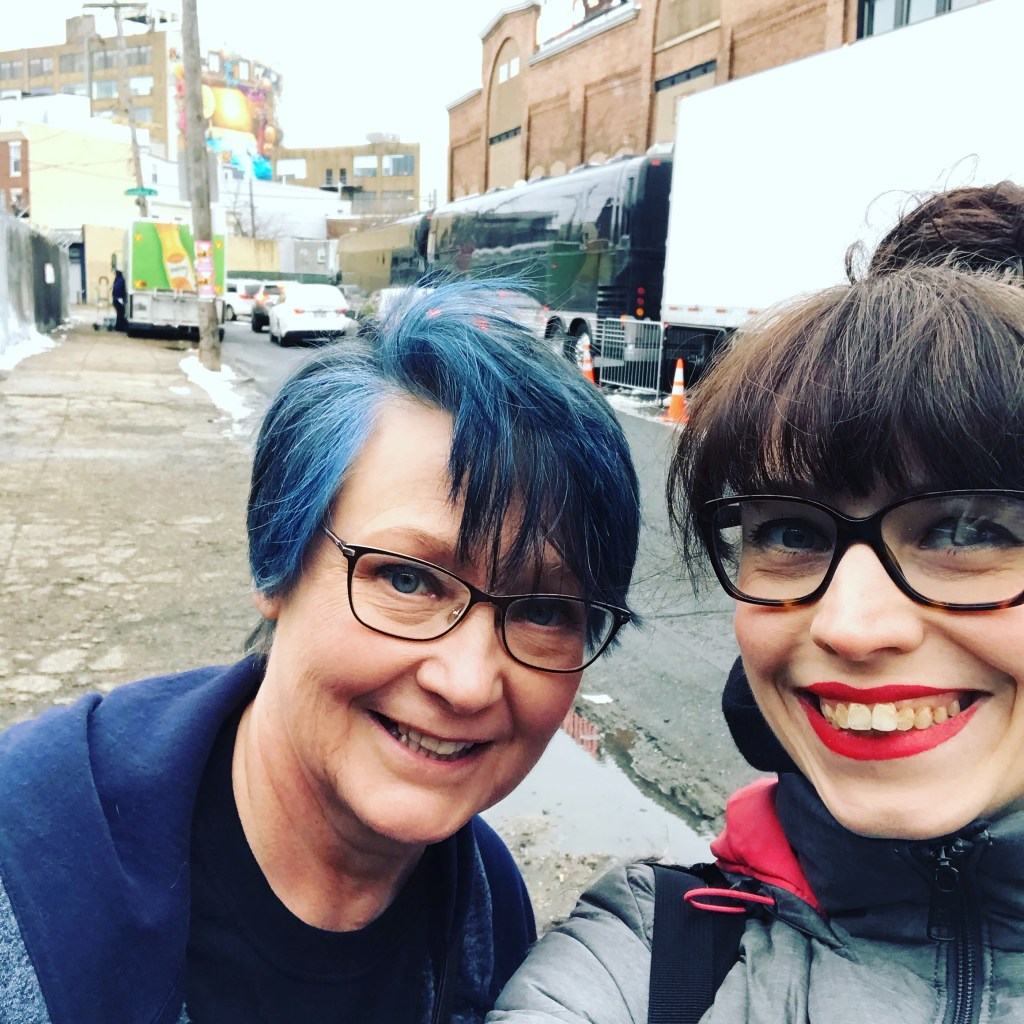
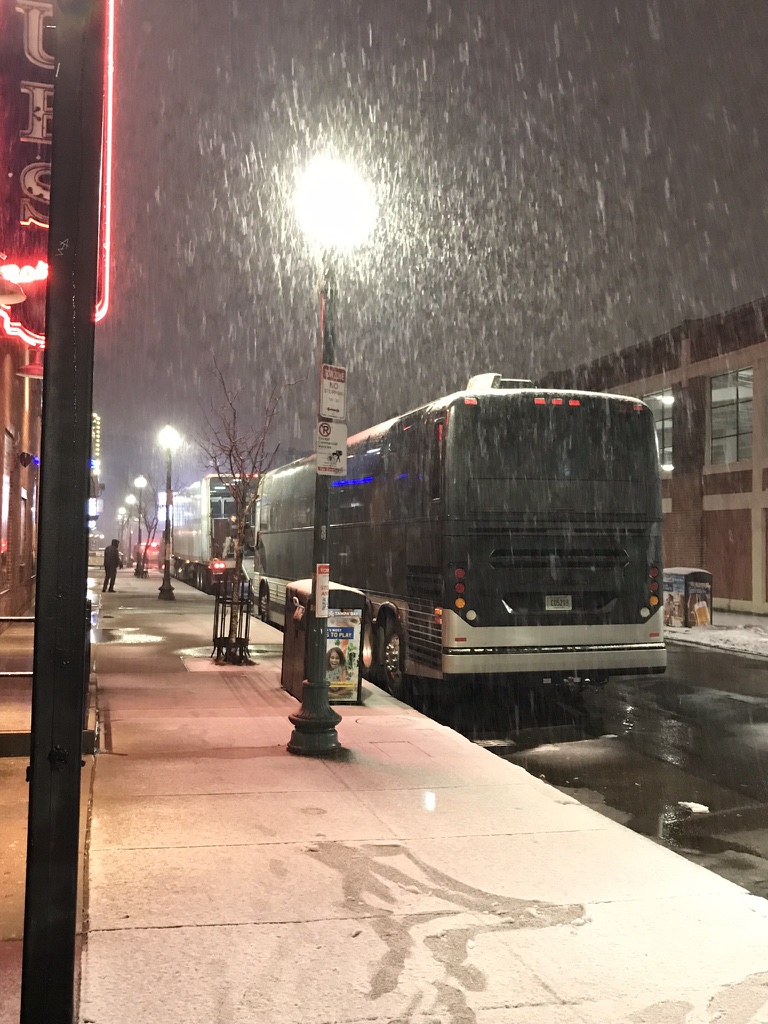
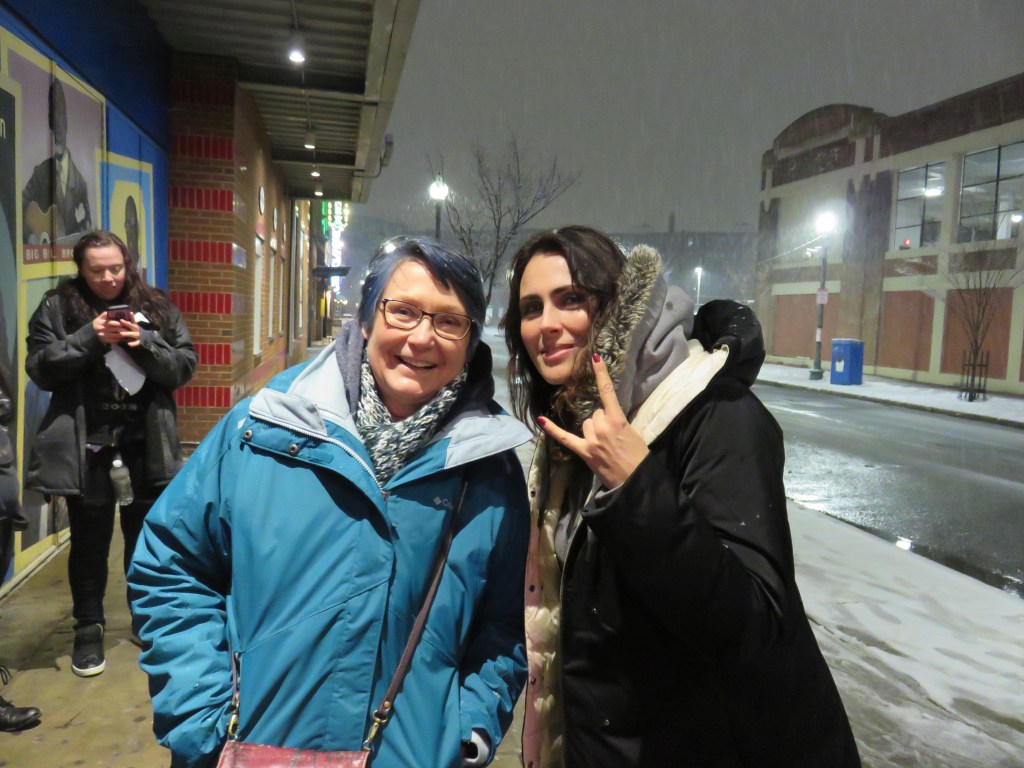
The show is a reprise of the two prior nights. Each crowd is different, but the atmosphere is thick with enthusiasm and excitement. Afterward, we emerge from the theater to find snow falling steadily and the street blanketed. WT’s bus is standing nearby. We pace up and down, stomp our feet, and watch the snow fall. We hope the band will appear. A couple at a time, they come out of the bus and wander over to us to chat a moment, sign autographs and take pictures, before heading to the pub down the block. Finally, Sharon comes out, and she too pauses to visit with us. They have a driving day ahead of them tomorrow, and she seems relaxed. 

Tonight, with heavy snow forecast (already a few inches on the ground), my worried husband has lined up a hotel in Copley Square where we can sleep through the storm. 

What a night, what a weekend. When’s the next one?

Groningen, Where Everything Changed…

Forget the coronavirus for a few minutes, and come back with me…

I grew up in the Sixties, saw The Beatles on the Ed Sullivan Show, the night before my 10thbirthday, along with 73 million other people. I spent most of my early teenage years with my little transistor radio glued to my ear (it was about the size of my smart phone, but a little thicker). The Beatles went in their direction, and I wandered away. Married in my twenties, we lived briefly in California where I listened to a progressive rock radio station that introduced me to Elvis Costello, Patti Smith, Joan Jett, the Cars, but then we moved again, to northern Maine where the only radio station that appealed to me was public radio. I listened to classical music in the mornings every day, Morning Pro Musica with Robert J. Lurtsema. And then somewhere along the line, even that stopped.

So I was musicless until 2018. Never went to a concert of any type—well, Arthur Fiedler and the Boston Pops came to my hometown while I was in high school; Teresa Stratas, a star singer with the Metropolitan Opera also visited and my mother, desperate to hear her, took me along. And then there was Weird Al, maybe ten years ago, with my daughter. But that’s it. Nothing else. I recall sitting on the stairs in my father’s house, knowing the Monkees (or was it the Beatles? Hard to know, it was so long ago) were in Boston—but that was so far away, and when I was a kid, there was no money for such things.

Fast forward—it’s 2017, and my daughter, Kristin, is fascinated with a band—a Dutch band. The band hadn’t toured in 4 years, and she’d missed them that time, so she said, “Hey Mom, how about we go see Within Temptation? They’re touring again.” “Where?” “Europe”. This of course gave me pause, but  life had changed over the last few years: my husband and I had been traveling a lot; I’d spent a few months in the Netherlands on my own; and a milestone birthday was approaching for my daughter. After some further thought, I agreed.

What had I done? I’m going to the Netherlands to see a symphonic metal band. I don’t even know what that is. My daughter insisted we buy tickets immediately—“They will sell out fast!” A few days later, “I also snagged VIP tickets,” she told me.  Now I am not only going to a metal concert, but I am also going to meet the band. What have I done? Did I mention I was 64 years old at the time? 

With the tickets bought so far ahead, I had time to do my homework, but procrastinator that I am, it was Fall 2018 before I got some CDs and started listening. My daughter had actually played some of the band’s music on a road trip to Maine a few years earlier, so a couple of songs were actually familiar. I asked her about mosh pits—were those a thing to worry about? Not with this band, she assured me. I knew metal music only from headlines and that whole Walmart-banning-explicit-lyrics-thing that happened a while back.

November arrives, and shortly after Thanksgiving, we arrive in Groningen, Netherlands. Our hotel is next to the venue, Martini Plaza. In the evening, we scope it out, make sure we know where to show up for the VIP thing.

On concert day, we appear in the venue lobby, and wait. A small group of others, mostly from around Europe, are also there, and we chat. Most have been following Within Temptation for years, like my daughter.

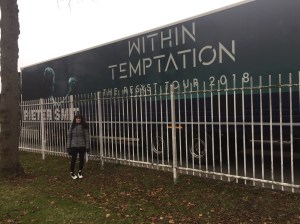
Kristin in front of one of the band’s trailer trucks.

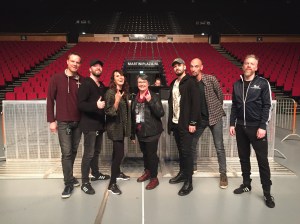
Then we enter the hall where we will first listen to sound check. The singer, Sharon den Adel, is there, soon joined by the other band members. She is dressed in jeans and a comfy jacket and leggings, and she’s tiny, and when she sings, her voice is pure, beautiful, but I understand she is not turning it all on right now, not yet. They come down from the stage, to chat and take pictures. It all feels so natural, strangely ordinary. Ruud Jolie, lead guitarist, says to me, “You’ve never been to a concert and you decide to come to Netherlands to see us as your first?” Yes, indeed!

(L to R) Mike Coolen, Ruud Jolie, Sharon den Adel, me, Stefan
Helleblad, Jeroen van Veen, Martijn Spierenburg
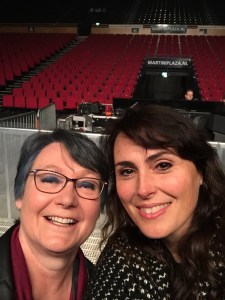
Our selfie, but Sharon had to click the picture!

Following a tour of the backstage area, we take up our spots on the railing in the hall, and wait. Now the waiting is hard. My old feet are feeling it (we—perhaps foolishly—had walked into Groningen in the morning, not wanting to waste a minute.) Tech people are puttering around on the stage. Someone is tuning a guitar—“Is that one of them?” I ask my daughter. “No, just a techie.” Then the lights go down. A momentary hush.

Guitars scream, the bass pounds. Ego Kill Talent takes the stage, wild and crazy, leaping about, stomping, guitars driving, lights flashing from all angles. The music surges through me, like a tsunami, pounding, vibrating my body like I’ve never felt before. I am alive! I can feel it! I have never felt so alive!

That’s me with the pink wristband (photo by Janne van der Vegt)

Again the lights go up, again we wait, but now everyone is impatient, watching watches, checking phones. At last Within Temptation takes the stage—drummer, keyboardist, guitarists, and finally, Sharon emerges, and the crowd goes wild. Her voice is perfect, and she is radiant. I am teary-eyed. I cannot believe I am here.

I am so close to the stage that I can watch Ruud’s hands on his guitar, I can tell the notes he is playing. The lights are flashing, smoke is pouring from the stage like eruptions, jet blasts, contrails spraying from the floor. The drums—oh, the drums! The pounding is going right through me. I feel the music, and when Sharon sings the lyrical bit at end of Raise Your Banner, my heart is in my throat.

I knew from that moment there is no going back to silence.

Me with Ruud Jolie after the show–around 2 am