London At Last!

Leaning on the railing of London Bridge amidst throngs of people on this amazingly sunny November day, with the Thames, Tower Bridge, and HMS Belfast all arrayed before me, I could only think how good it was to be back in London, one of my favorite and most visited cities.

Fourteen years ago, when I emerged from the St. Pancras train station in London that very first time, I was filled with a sense of homecoming. Today’s vista evoked that same sense. Ever since I was old enough to know about this place, I’d been fascinated by all things British. I’d read voraciously about England, always favoring English writers. I had an English pen-pal. I studied English history when I was in college. It was not ever a matter of “if” I would visit England, but “when”. I always knew I would. In 2008, I finally arrived for what would prove to be the first of many visits. But when we last visited in 2017, I did not expect it to be 5 years before I could return. Indeed, it wasn’t supposed to be.

In November 2019, the Dutch symphonic metal band, Within Temptation, announced their Worlds Collide Tour with co-headlining American band Evanescence. When I saw London’s O2 Arena on the list of dates, I decided it was high time I introduced my daughter (she who had introduced me to Within Temptation) to this most favored city. I planned a family trip around it, inviting my Dickens-fan daughter and her husband to join us as well in April 2020, and I immediately began planning an itinerary to please all five of us.

And then, of course, you know what happened. Three Tour postponements due to the pandemic left me feeling the trip would never happen. Life got in the way further causing Megan and her husband to pull out of the still-uncertain trip. The latest reschedule put the Tour’s kickoff in November 2022. We didn’t book flights until a month out, when I finally felt reasonably confident the Tour would happen.

Even as we sat on the airplane waiting to taxi, I couldn’t ditch the foreboding that something would crop up at the last moment to prevent this trip. As I lugged my carryon along the jetway at Heathrow’s Terminal 3, I began to believe it, but, at last, standing now on London Bridge, the matter was settled–I’m back in England!

On our previous visits, getting from Heathrow to London proper meant an hour-long journey at a minimum, as we usually took the Underground, involving an hour ride into the city. However, a few weeks before our trip, I’d read about the Elizabeth Line, a new railway line recently opened by Queen Elizabeth that would eventually connect Heathrow seamlessly to Canary Wharf—but not just yet, said the article; the new line was only operating to Paddington Station, where we would have to switch to another train. When we boarded the Elizabeth Line at Heathrow, however, we learned from another passenger who used it for her regular commute that the Canary Wharf section had indeed just opened “last week”. Happy news, since we’d booked our favorite London hotel, the Marriott Canary Wharf, for its easy proximity to the O2 Arena.

One thing I always appreciate about traveling to London is that we take a night flight that gets us into Heathrow in the morning—we don’t lose a day for travel. Since I can’t sleep on airplanes, I usually hunker down with a good book or fine-tune my sightseeing plans. It also means I’m eager to get off the plane and usually find I’m running on adrenaline by the time we reach the hotel. I’ve found the best way to get acclimated to local time is to just keep running—with the fortunate result that I never have jet lag.

My plan to introduce Kristin to London got underway immediately on arrival. We stopped at the hotel long enough to drop our bags in our room (we requested an early check-in) and freshen up a bit, then it was out the door and back to the Underground where we hopped on the Jubilee Line to London Bridge Station. From there, we could clear out the last vestiges of air travel brain fog with a walk along the Thames while taking in the iconic sights.

Emerging from the tube station, we walked across London Bridge crowded with people. From here, you get a lovely view of Tower Bridge, the World War II battle cruiser HMS Belfast, the Shard and the London skyline.
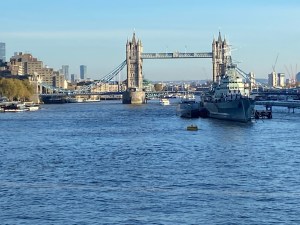
View of Thames River from London Bridge, showing Tower Bridge, HMS Belfast

View looking east from London Bridge

On the north bank, we picked up the Thames Path (a national walking path following the Thames River from the Cotswolds through London toward the sea) and wandered along it for awhile before crossing back to the south bank by way of the pedestrian-only Millenium Bridge. Completed in 2000-2001, this bridge was the first new bridge to be built across the Thames in over a century.

From North Bank, looking across the Thames for a view of the pointy building known as the Shard
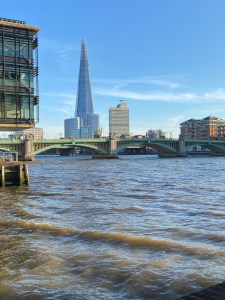
The Millenium Bridge deposits you near the Tate Modern, one of the world’s most popular modern art museums (so says the Blue Guide to London), and the recreated Shakespeare’s Globe Theatre.
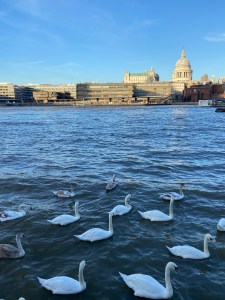
From South Bank, looking across the Thames to the dome of St. Paul’s Cathedral

On the south bank, we picked up the Queen’s Walk (WalkLondon.com offers a self-guided sightseeing tour) and staved off hunger with roasted nuts from a Bankside vendor before continuing on. Along the way, we passed the graffitied Southbank Skate Space.
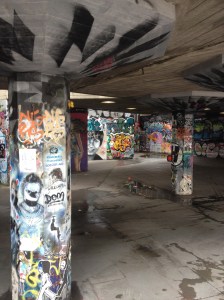
The skate space as it appeared in 2012; see the link for the story of how this space became a skate boarder’s paradise.

The Southbank Centre Winter Market was in full swing, with pop-up bars (where you could enjoy a warming hot toddy, for instance) and food (not your average street food—we saw Dutch pancakes and lobster on offer) housed in chalet-like shelters limned with holiday lights.

We could not let Kristin’s first day in London go by without a Big Ben sighting, so we crossed the Westminster Bridge with its picture-postcard view of the Houses of Parliament and the newly refurbished Elizabeth Tower housing Big Ben. “Big Ben” is actually the name of the bell inside the tower that tolls the hours accompanied by the familiar Westminster Chimes.
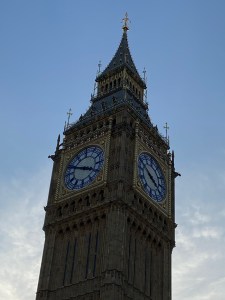
With the adrenaline edge fading, hunger starting to take its toll, and husband’s knees in full protest, we headed into the Westminster Underground Station to catch the Jubilee Line back to Canary Wharf, intending to find The Grapes, an historic pub that looked near to the hotel.

Best laid plans! Canary Wharf being an area of former docks and industrial sites, it turned out “you can’t get there from here” as we say in New England. We were also plagued by a lack of internet (Be sure to check your cell carrier’s international rules before traveling abroad!) and my intention to rely on Google Maps fell by the wayside.

When we finally found The Grapes (where Charles Dickens allegedly danced on the tables as a child), dinner was not to be served for another hour, and already patrons were standing about outside, beers in hand. Instead, we retraced our steps (much more easily this time) back to Canary Wharf, where we found a casual Italian place, Zizzi, at Cabot Place, one of the shopping areas at Canary Wharf.

Reinvigorated, we headed back to the hotel to land in the bar. Although we opted for the Marriott Canary Wharf for its easy access to the O2 Arena, we had an ulterior motive—this hotel’s bar has 150 gins on offer! Such a lovely way to unwind after this long day’s journey into night.

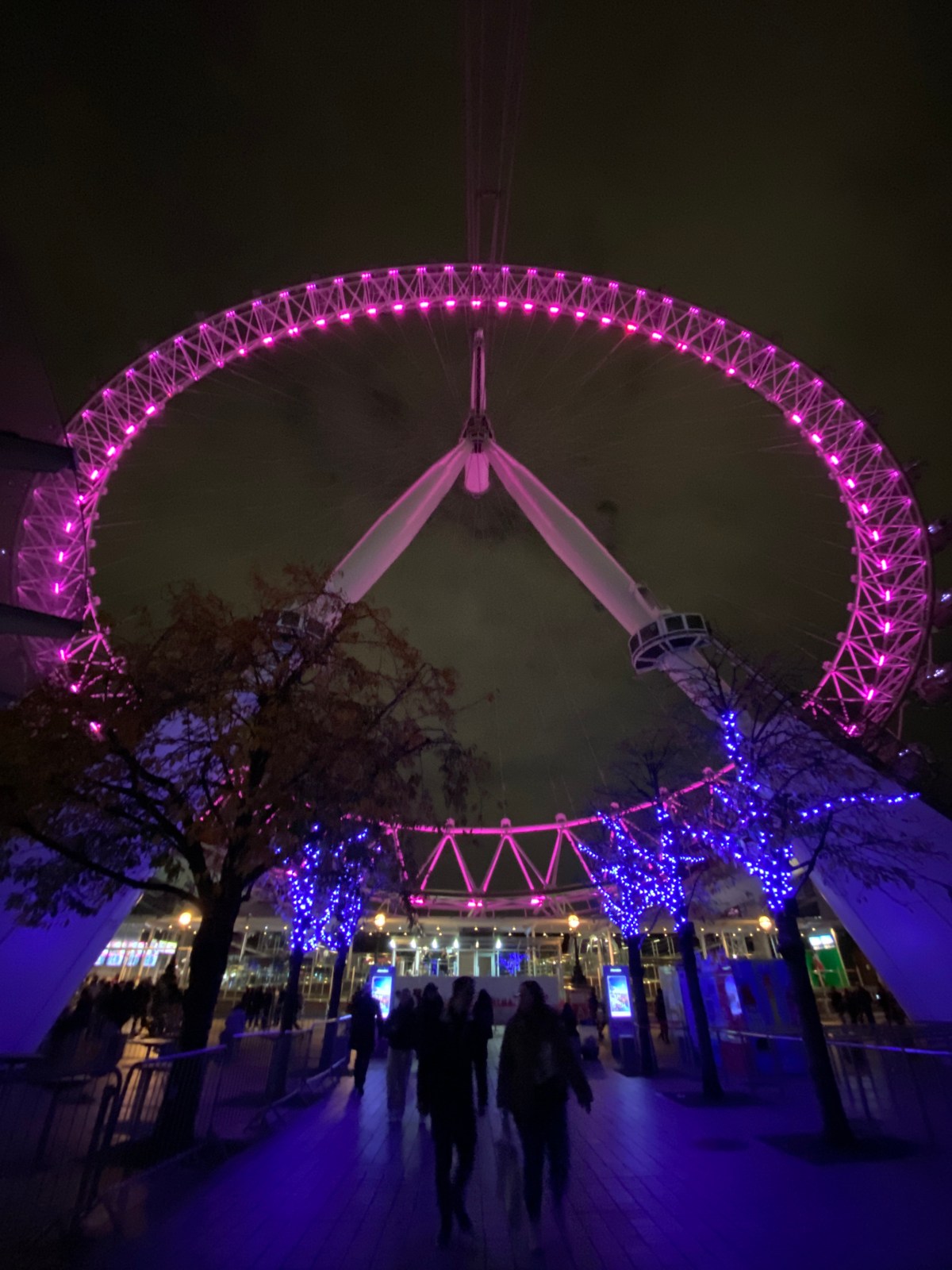
Featured photo above: The illuminated London Eye looks like a giant peace symbol when viewed from Jubilee Gardens at night.
Finding the Home of the Good Luck Cat

With almost a year of Pandemic behind us and unable to travel, I dust off memories of our last big trip, to Japan, in August 2019…

We were in Tokyo, and one day, my original plan was to go to Asakusa for the day while my husband was in meetings. I’d been there with him on a previous trip, and I knew I could easily spend hours and hours there among the temples. But dinner plans settled the night before meant that today, I needed to find a simpler option.

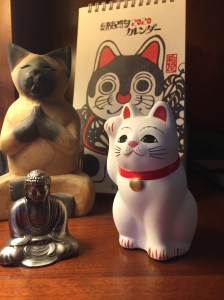
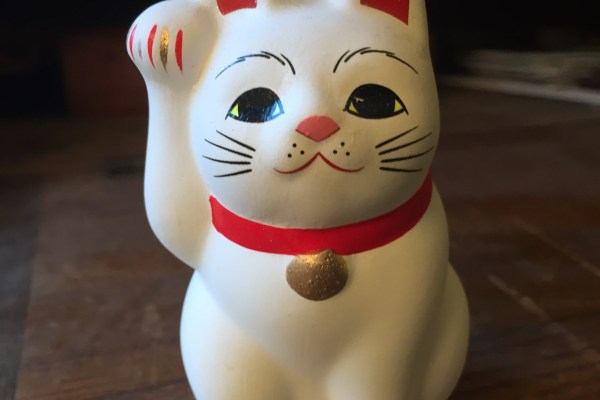
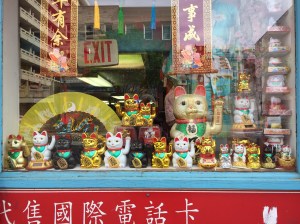
Good Luck Cats fill a window near Chinatown, Washington D.C. April 2019

I googled “don’t miss sights Tokyo” and when the list appeared, I skimmed it for a place I’d never been. One caught my eye—Gotokuji—the home of the lucky cat. Some of the reviews said, “Don’t bother—boring and hard to get to”, but others said, “If you love cats, you should go.” I decided to go.

I worked out the route with the help of Google maps: from Shinagawa Station on the Yamamoto line to Shinjuku and there change to Odakyu line to Gotokuji Station, then 15 minute walk to the temple. It sounded like a perfect opportunity to try my place-finding skills in the Tokyo suburbs.

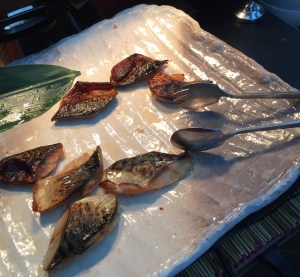
mackerel

After a breakfast of ramen noodles, miso, and a taste of mackerel, among other things, I set out from our hotel. The morning was very hot and humid, and within minutes, I was dripping sweat as I walked to Shinagawa station. 

I caught our accustomed Yamamoto line train to Shinjuku. We’d done this several times already—to go to Shibuya to do the Scramble, to the Kinokuniya bookstore in Shinjuku, and our very first outing, to Shinjuku Gyo-en National Garden. We’d had some challenges finding the garden once we got out of the station that first day, but at this point about a week into our stay, I felt confident. 

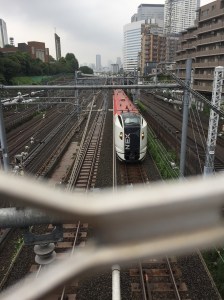
Trains running past our hotel in Shinagawa

Everything was going smoothly until I went looking for the Odakyu line. I found myself in another part of the station able to go no further since I’d put my ticket in the entrance machine and it believed my journey was done. Does this mean I have to go out of the station?  I was in complete confusion until I spotted ticket vending for the Odakyu line, where I was able to buy a ticket for Gotokuji, and realized, yes, I had to go out of the station to re-enter for the Odakyu line. 

Going away from Tokyo at late morning, the train was nearly empty.  Arriving at Gotokuji station—just a platform—I headed down some stairs and outside. Now what? I did not see a sign to the temple so I set out in the direction I thought I should go, but the path seemed to go only under the tracks. 

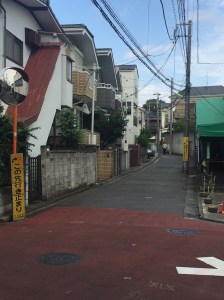
Where now? I headed back toward the station to get my bearings and start again. Without Wi-Fi, I’d been avoiding Google maps, but now, rather than wasting more time, I pulled out my phone, oriented myself, and set out again—only to find that I’d been going in the right direction after all. A short walk to the right under the tracks and straight on from there until I came to a little neighborhood, turn right, then straight down a narrow street lined with little houses. Some appeared to be multi-family, some single family with the tiniest yards. Every home had plants, shrubs, flowers, bicycles propped by gates, stone walls. 

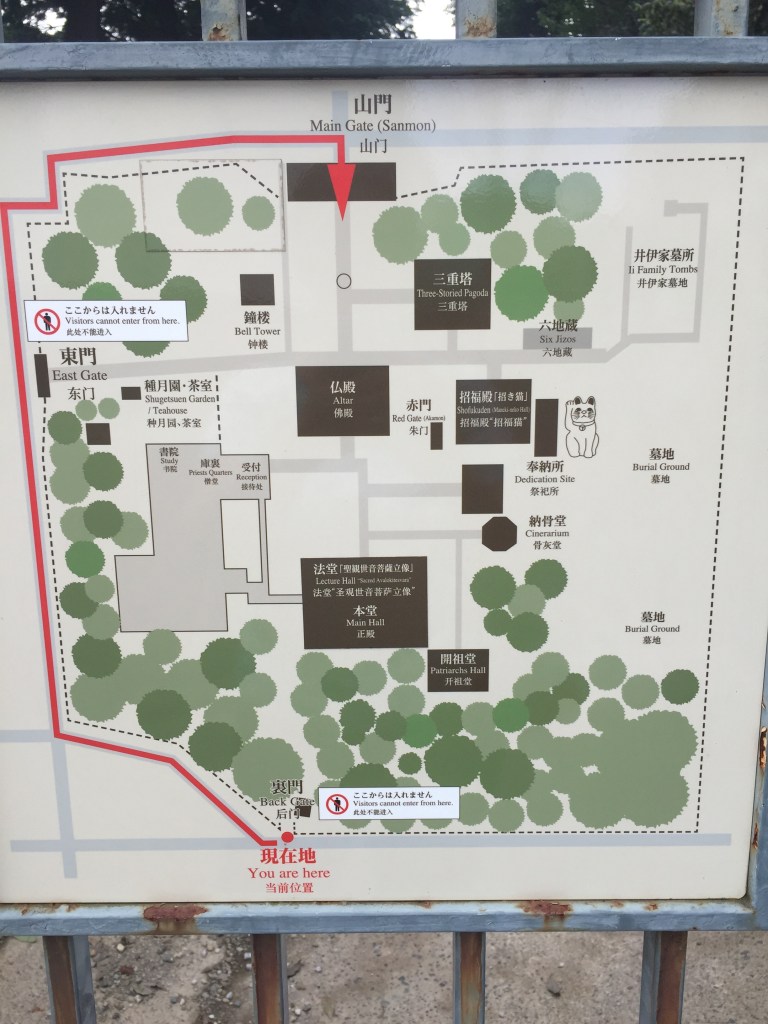
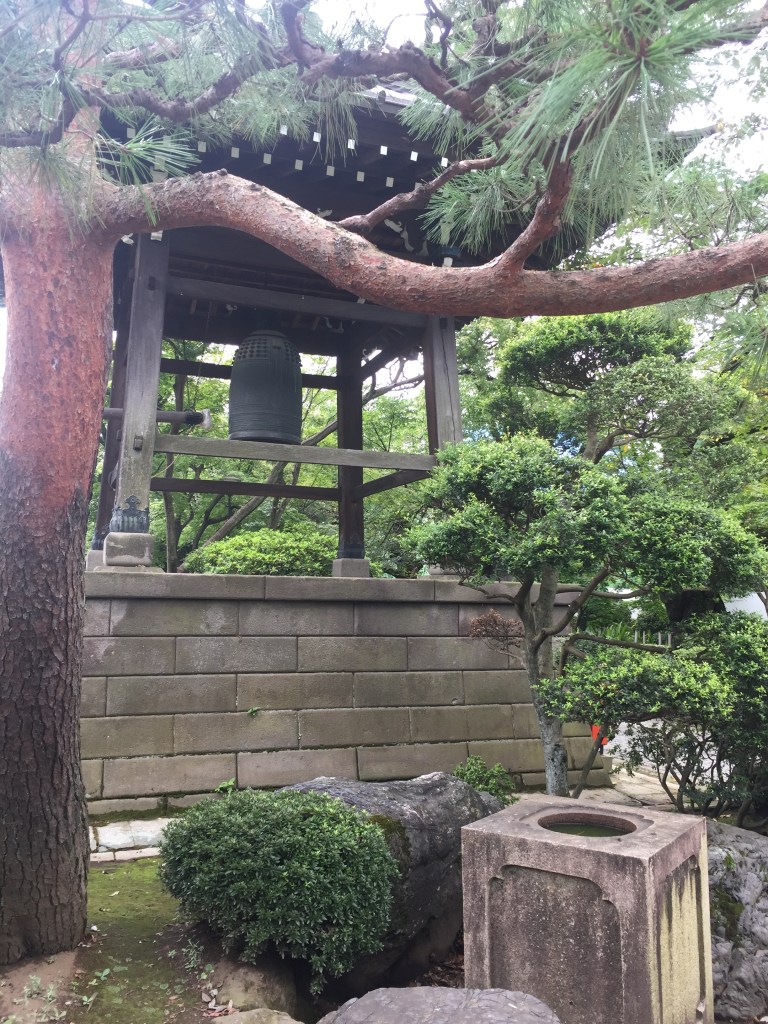
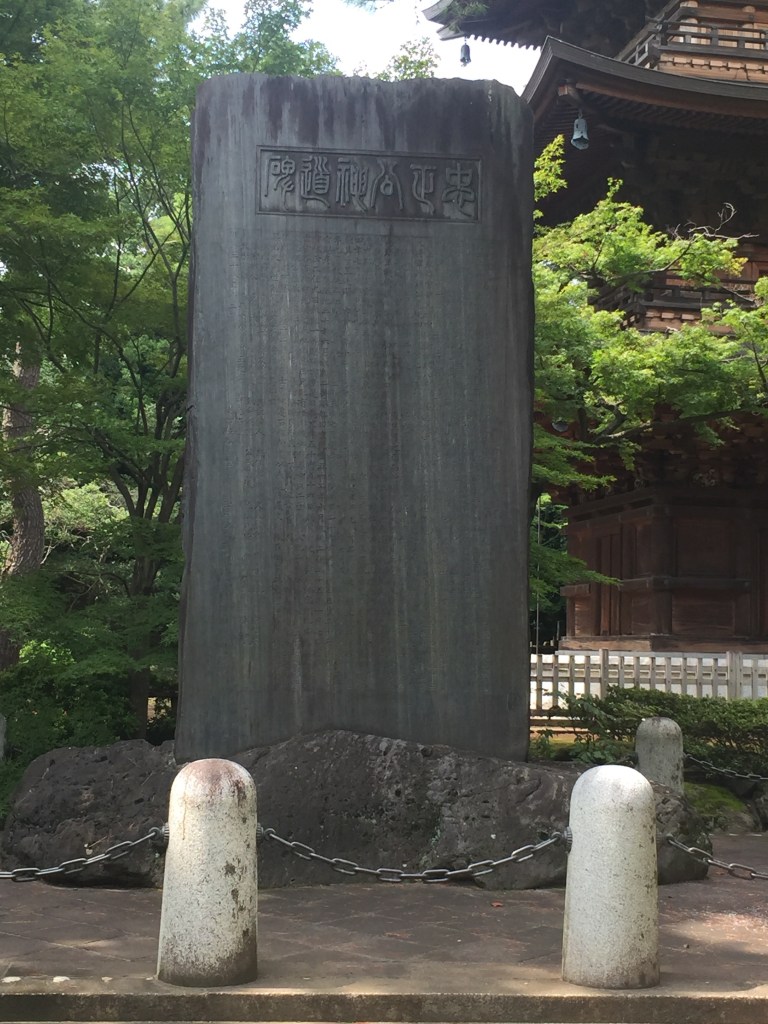
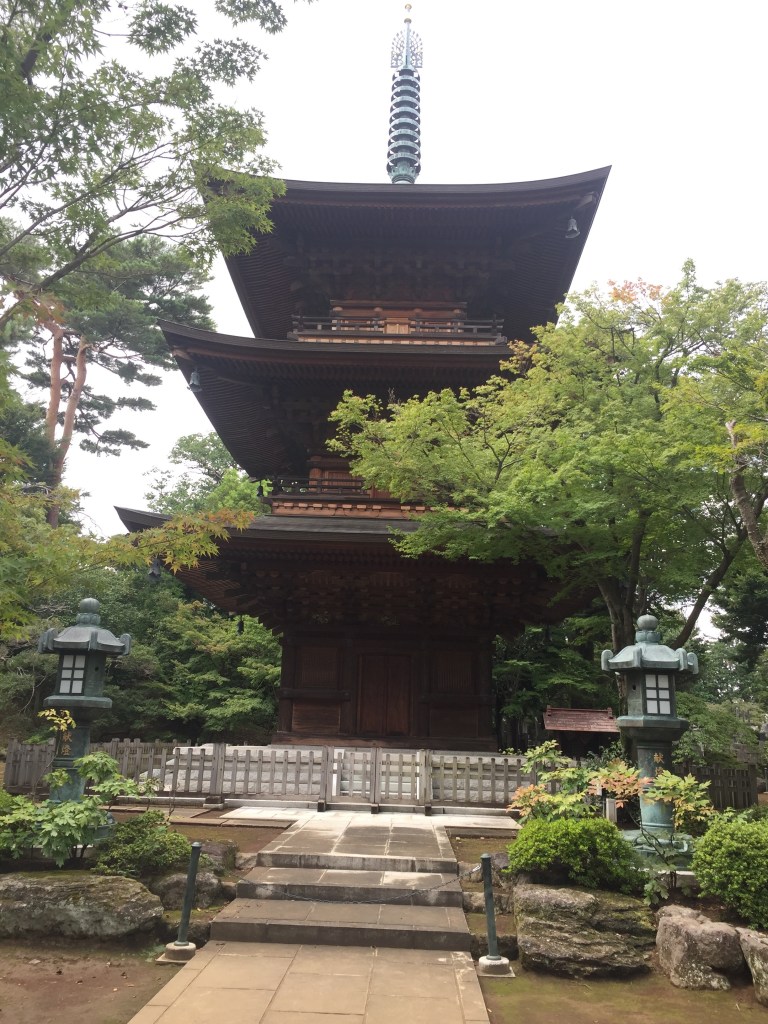
Finally I came to a high wall with a gate and a sign advising me—in English—this is the back of the temple, walk to the left and go to the front. Around another corner, and now before me, the big gate—the main entrance. I walked along a path shaded with trees, passing a 3-tiered pagoda, a tall monument of slate covered in Japanese characters, the temple bell. 

In front of the temple itself, an urn of sand and incense was set in the middle of the walkway.  The lighter wouldn’t light for me, so I waved the smoke hanging in the air above the urn into my face. 

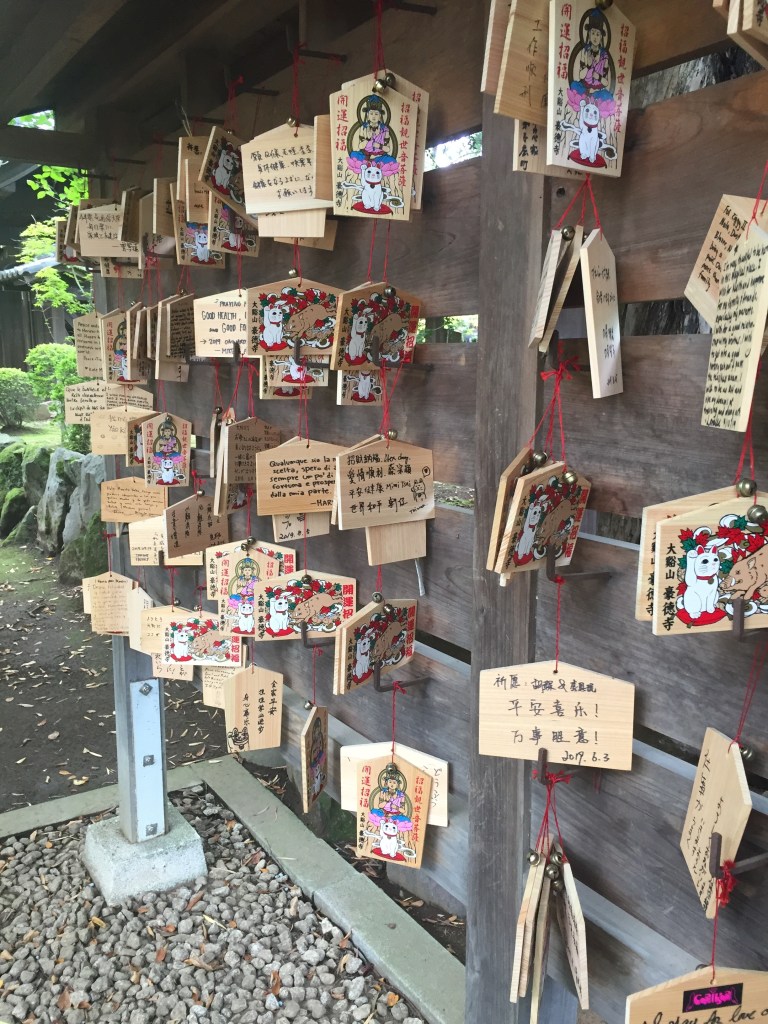
I wandered from building to building. The dark wood and beige stucco of the buildings spoke of the antiquity of the place, inviting me to linger. A few people were heading down a path, and sensing they knew where they were going, I followed along. On my right, a board displayed wooden cards, some written in English, most in Japanese, with prayers and requests for wishes to be granted. Each one carried a picture of the famous cat with paw raised. 

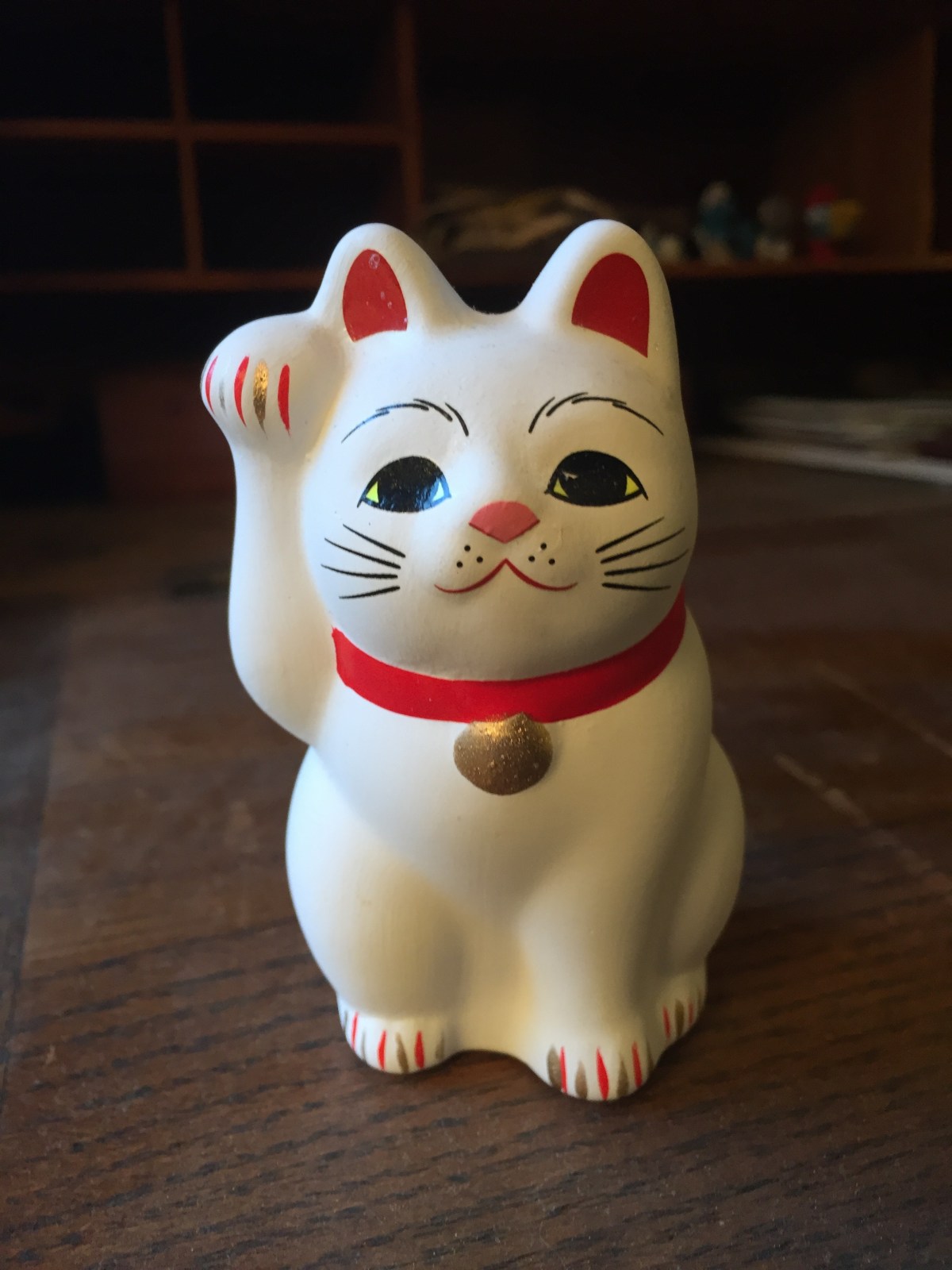
A little further on, I find what I’ve come for. So many cats, from the size of an acorn to very large ones, perhaps a foot tall, all exactly the same. Each representing someone’s wish, granted or hoped for. Some have been there a very long time, now dusted with green algae from the humidity, while others are bright white and new. They cluster around a lordly relaxing bas-relief Buddha who serenely oversees them.

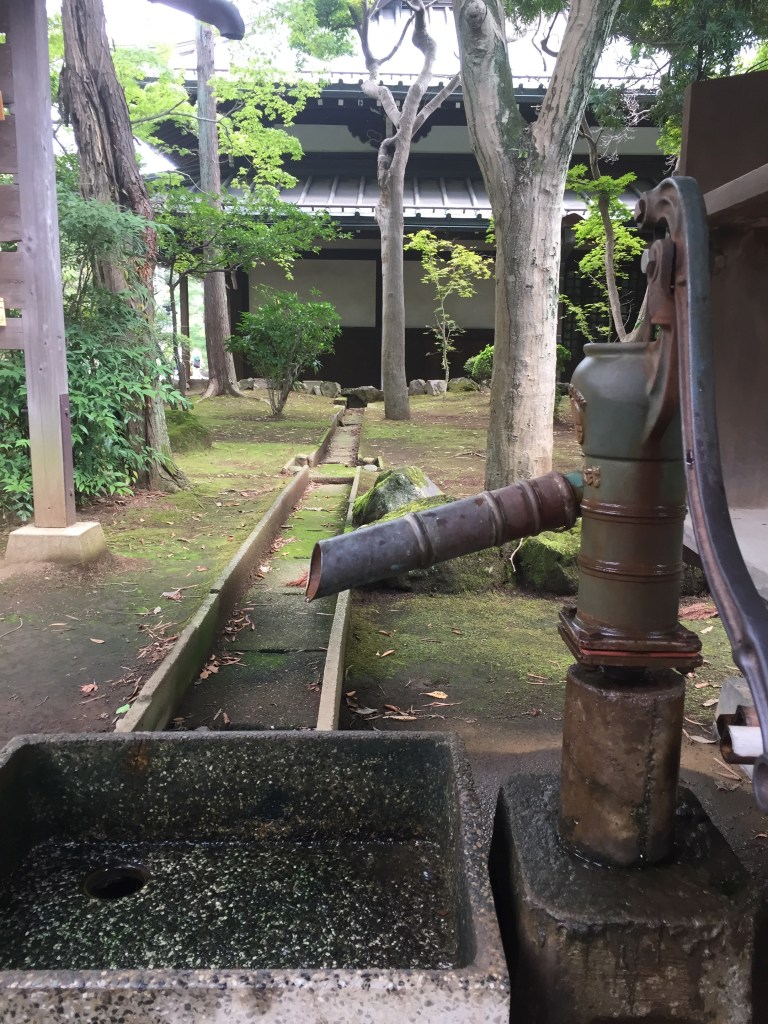
The temple is small; only a few buildings can be entered. Near the main building, a water pump can be worked to send water into a channel; like others, I try pumping and watch the trickle into the channel. In front of the temple building near the cats, people—smiling couples, elders, families—approach, bow, clap hands, pray briefly, bow, pull the bell cord to make it chime, and then wander off.  I do the same, making my wish for health and happiness for my family.

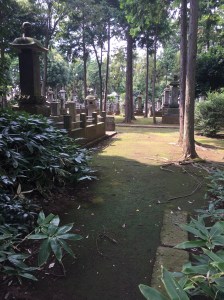
Walking further, I come upon the cemetery, where I wander around looking at the stones, and then nearby, come to the little shop where you can buy a beckoning cat to place at the Dedication Site. I bought cats to bring home to my family, and the smiling lady seemed so happy that I was there as she pressed into my hand an English copy of the beckoning cat’s story. …

A long time ago, the temple was nothing more than a shabby hut where a monk lived on alms and little else. He had a cat he loved as his own child, and one day, he said to the cat, “If you are grateful to me, bring some fortune to the temple.” A long time later, in the summer, a group of Samurai warriors came by. They said, “We were about to pass your gate, but there was a cat crouching and suddenly it lifted its paw and started waving at us, inviting us to rest.” So the monk brought them tea and urged them to relax. Suddenly a thunderstorm sent pouring rain and lightning, forcing them to remain with the monk, who passed the time by preaching to them about the Buddha.  The Samurai, so impressed, told the monk that he was king of a prefecture and because of the cat’s waving, he was able to hear this message, saying “This must be Buddha’s will.” After he returned home, the Samurai donated huge rice fields and croplands to the temple. Because of the cat, fortune came to the temple, which is now called the cat temple. The statue of the cat was established to help people remember the story, and now everybody knows it as a symbol of household serenity, business prosperity, and fulfillment of wishes.

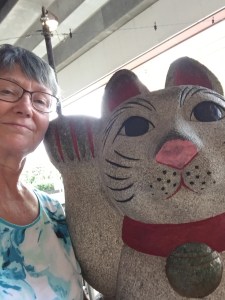
Back at the Gotokuji Station…how did I miss this guy?

Finding the Home of the Good Luck Cat

With almost a year of Pandemic behind us and unable to travel, I dust off memories of our last big trip, to Japan, in August 2019…

We were in Tokyo, and one day, my original plan was to go to Asakusa for the day while my husband was in meetings. I’d been there with him on a previous trip, and I knew I could easily spend hours and hours there among the temples. But dinner plans settled the night before meant that today, I needed to find a simpler option.

Good Luck Cats fill a window near Chinatown, Washington D.C. April 2019

I googled “don’t miss sights Tokyo” and when the list appeared, I skimmed it for a place I’d never been. One caught my eye—Gotokuji—the home of the lucky cat. Some of the reviews said, “Don’t bother—boring and hard to get to”, but others said, “If you love cats, you should go.” I decided to go.

I worked out the route with the help of Google maps: from Shinagawa Station on the Yamamoto line to Shinjuku and there change to Odakyu line to Gotokuji Station, then 15 minute walk to the temple. It sounded like a perfect opportunity to try my place-finding skills in the Tokyo suburbs.

mackerel

After a breakfast of ramen noodles, miso, and a taste of mackerel, among other things, I set out from our hotel. The morning was very hot and humid, and within minutes, I was dripping sweat as I walked to Shinagawa station. 

I caught our accustomed Yamamoto line train to Shinjuku. We’d done this several times already—to go to Shibuya to do the Scramble, to the Kinokuniya bookstore in Shinjuku, and our very first outing, to Shinjuku Gyo-en National Garden. We’d had some challenges finding the garden once we got out of the station that first day, but at this point about a week into our stay, I felt confident. 

Trains running past our hotel in Shinagawa

Everything was going smoothly until I went looking for the Odakyu line. I found myself in another part of the station able to go no further since I’d put my ticket in the entrance machine and it believed my journey was done. Does this mean I have to go out of the station?  I was in complete confusion until I spotted ticket vending for the Odakyu line, where I was able to buy a ticket for Gotokuji, and realized, yes, I had to go out of the station to re-enter for the Odakyu line. 

Going away from Tokyo at late morning, the train was nearly empty.  Arriving at Gotokuji station—just a platform—I headed down some stairs and outside. Now what? I did not see a sign to the temple so I set out in the direction I thought I should go, but the path seemed to go only under the tracks. 

Where now? I headed back toward the station to get my bearings and start again. Without Wi-Fi, I’d been avoiding Google maps, but now, rather than wasting more time, I pulled out my phone, oriented myself, and set out again—only to find that I’d been going in the right direction after all. A short walk to the right under the tracks and straight on from there until I came to a little neighborhood, turn right, then straight down a narrow street lined with little houses. Some appeared to be multi-family, some single family with the tiniest yards. Every home had plants, shrubs, flowers, bicycles propped by gates, stone walls. 

Finally I came to a high wall with a gate and a sign advising me—in English—this is the back of the temple, walk to the left and go to the front. Around another corner, and now before me, the big gate—the main entrance. I walked along a path shaded with trees, passing a 3-tiered pagoda, a tall monument of slate covered in Japanese characters, the temple bell. 

In front of the temple itself, an urn of sand and incense was set in the middle of the walkway.  The lighter wouldn’t light for me, so I waved the smoke hanging in the air above the urn into my face. 

I wandered from building to building. The dark wood and beige stucco of the buildings spoke of the antiquity of the place, inviting me to linger. A few people were heading down a path, and sensing they knew where they were going, I followed along. On my right, a board displayed wooden cards, some written in English, most in Japanese, with prayers and requests for wishes to be granted. Each one carried a picture of the famous cat with paw raised. 

A little further on, I find what I’ve come for. So many cats, from the size of an acorn to very large ones, perhaps a foot tall, all exactly the same. Each representing someone’s wish, granted or hoped for. Some have been there a very long time, now dusted with green algae from the humidity, while others are bright white and new. They cluster around a lordly relaxing bas-relief Buddha who serenely oversees them.

The temple is small; only a few buildings can be entered. Near the main building, a water pump can be worked to send water into a channel; like others, I try pumping and watch the trickle into the channel. In front of the temple building near the cats, people—smiling couples, elders, families—approach, bow, clap hands, pray briefly, bow, pull the bell cord to make it chime, and then wander off.  I do the same, making my wish for health and happiness for my family.

Walking further, I come upon the cemetery, where I wander around looking at the stones, and then nearby, come to the little shop where you can buy a beckoning cat to place at the Dedication Site. I bought cats to bring home to my family, and the smiling lady seemed so happy that I was there as she pressed into my hand an English copy of the beckoning cat’s story. …

A long time ago, the temple was nothing more than a shabby hut where a monk lived on alms and little else. He had a cat he loved as his own child, and one day, he said to the cat, “If you are grateful to me, bring some fortune to the temple.” A long time later, in the summer, a group of Samurai warriors came by. They said, “We were about to pass your gate, but there was a cat crouching and suddenly it lifted its paw and started waving at us, inviting us to rest.” So the monk brought them tea and urged them to relax. Suddenly a thunderstorm sent pouring rain and lightning, forcing them to remain with the monk, who passed the time by preaching to them about the Buddha.  The Samurai, so impressed, told the monk that he was king of a prefecture and because of the cat’s waving, he was able to hear this message, saying “This must be Buddha’s will.” After he returned home, the Samurai donated huge rice fields and croplands to the temple. Because of the cat, fortune came to the temple, which is now called the cat temple. The statue of the cat was established to help people remember the story, and now everybody knows it as a symbol of household serenity, business prosperity, and fulfillment of wishes.

Back at the Gotokuji Station…how did I miss this guy?